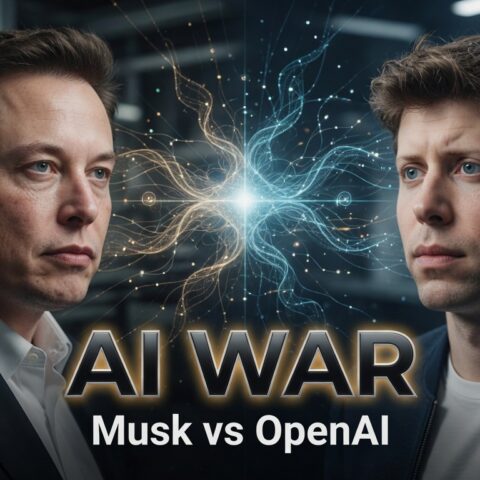
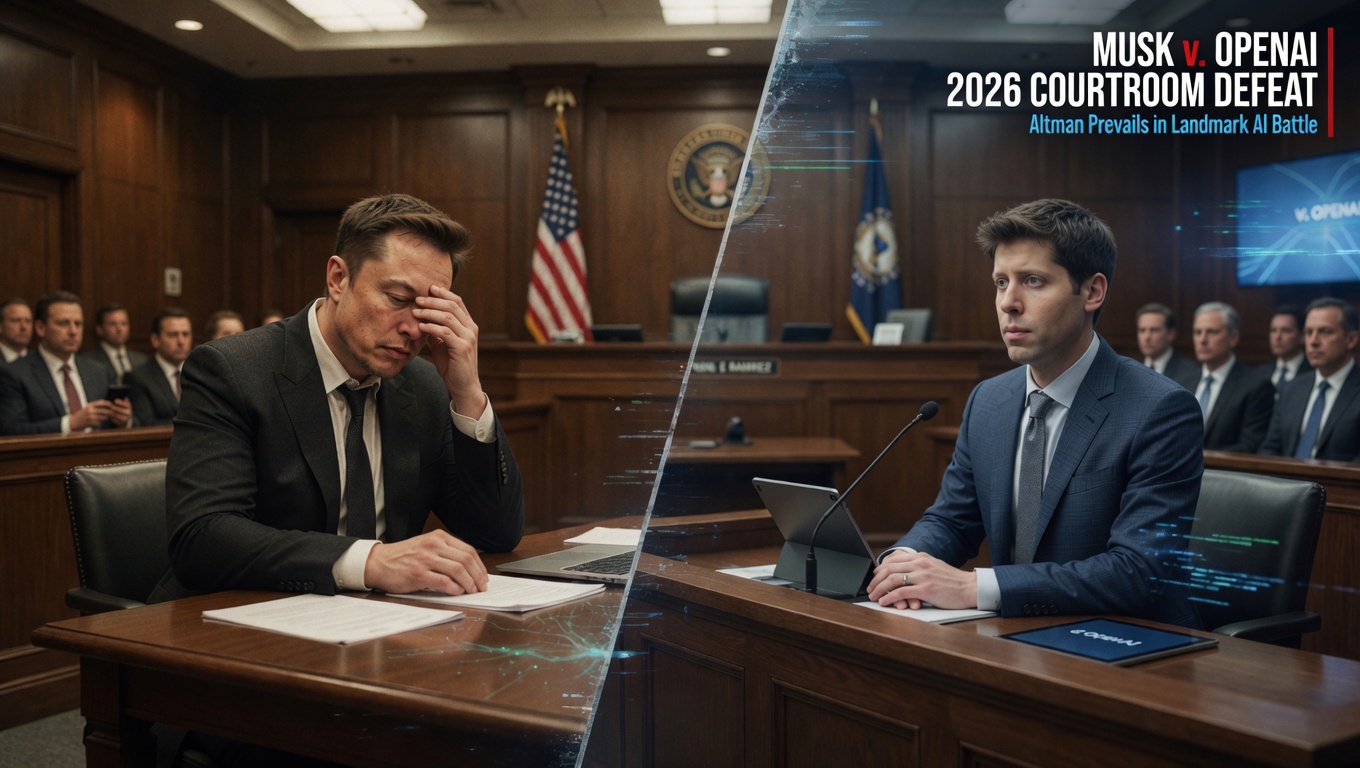
Elon Musk has suffered a major setback in his long-running legal battle against OpenAI, with a federal jury ruling against him in a closely watched case involving the company’s shift from a nonprofit organization into a commercial AI powerhouse.
The verdict, delivered in Oakland, California, marks one of the biggest legal victories yet for OpenAI and CEO Sam Altman as the artificial intelligence race continues accelerating worldwide.
What Was Elon Musk’s Lawsuit About?
Elon Musk originally sued OpenAI, Sam Altman, and other executives after accusing the company of abandoning its original mission. Musk argued that OpenAI was founded as a nonprofit organization focused on developing artificial intelligence for the benefit of humanity, not for corporate profit.
According to the lawsuit, Musk claimed OpenAI’s transformation into a profit-driven AI company violated the founding principles he supported when he helped launch the organization in 2015. He also alleged that the company’s leadership personally benefited from the shift while moving away from the nonprofit vision originally presented to early supporters and donors.
The case became one of the most important legal battles in the AI industry because it raised larger questions about AI governance, corporate control, and whether companies developing powerful AI systems should prioritize public benefit over profits.
Why Did Musk Lose the Case?
The jury ultimately ruled against Musk because the lawsuit was filed too late under legal time-limit rules known as the statute of limitations. Jurors concluded that Musk had already known about OpenAI’s evolving business structure and Microsoft’s involvement years before filing the lawsuit in 2024.
Reports from the trial indicated that evidence presented by OpenAI showed Musk himself had previously discussed the possibility of creating a for-profit structure while he was still involved with the company. OpenAI’s legal team also argued that Musk only escalated the legal fight after launching his own competing AI company, xAI.
The jury reportedly reached its decision in less than two hours.
OpenAI Scores a Massive Victory
The ruling is considered a huge win for OpenAI because Musk’s lawsuit had threatened to complicate the company’s future expansion plans and potential public offering.
OpenAI has rapidly grown into one of the most valuable AI companies in the world following the success of ChatGPT. Reports suggest the company is pursuing extremely ambitious growth plans that could eventually lead to a valuation approaching $1 trillion.
Legal analysts believe the court victory removes a major obstacle for OpenAI as competition in the AI industry intensifies between companies like OpenAI, Google, Anthropic, Meta, and xAI.
Musk Says He Will Appeal
Despite losing the case, Musk has already stated that he plans to appeal the ruling. Following the verdict, he criticized the decision publicly and argued that the jury never fully examined the deeper ethical issues surrounding OpenAI’s transformation.
Musk has repeatedly warned about the risks of concentrated AI power and has positioned himself as a critic of OpenAI’s corporate direction in recent years.
The legal battle also highlighted the growing rivalry between Musk and Sam Altman, two of the most influential figures in the AI industry today.
Why This Case Matters Beyond OpenAI
The lawsuit was never just about one company. It exposed a much bigger debate happening across the entire AI industry: should advanced AI development remain mission-driven and publicly accountable, or is massive commercial investment now unavoidable to compete in the global AI race?
Building modern AI systems now requires enormous amounts of money, GPU infrastructure, cloud computing, and data centers. Many AI companies argue that large-scale commercial funding is necessary to continue developing increasingly powerful models.
Critics, however, worry that the original safety-focused goals behind AI development may weaken as companies become more profit-oriented and competitive.
Final Thoughts
Elon Musk losing the OpenAI lawsuit marks a major turning point in one of the most important conflicts in the modern AI industry.
The ruling strengthens OpenAI’s position as one of the dominant forces in artificial intelligence while also highlighting how quickly the AI sector is evolving into a high-stakes battle involving billions of dollars, global influence, and the future direction of advanced AI systems.
Even though Musk plans to appeal, the verdict has already become one of the biggest AI industry stories of 2026.