OpenAI’s reported move into hardware is sparking industry speculation
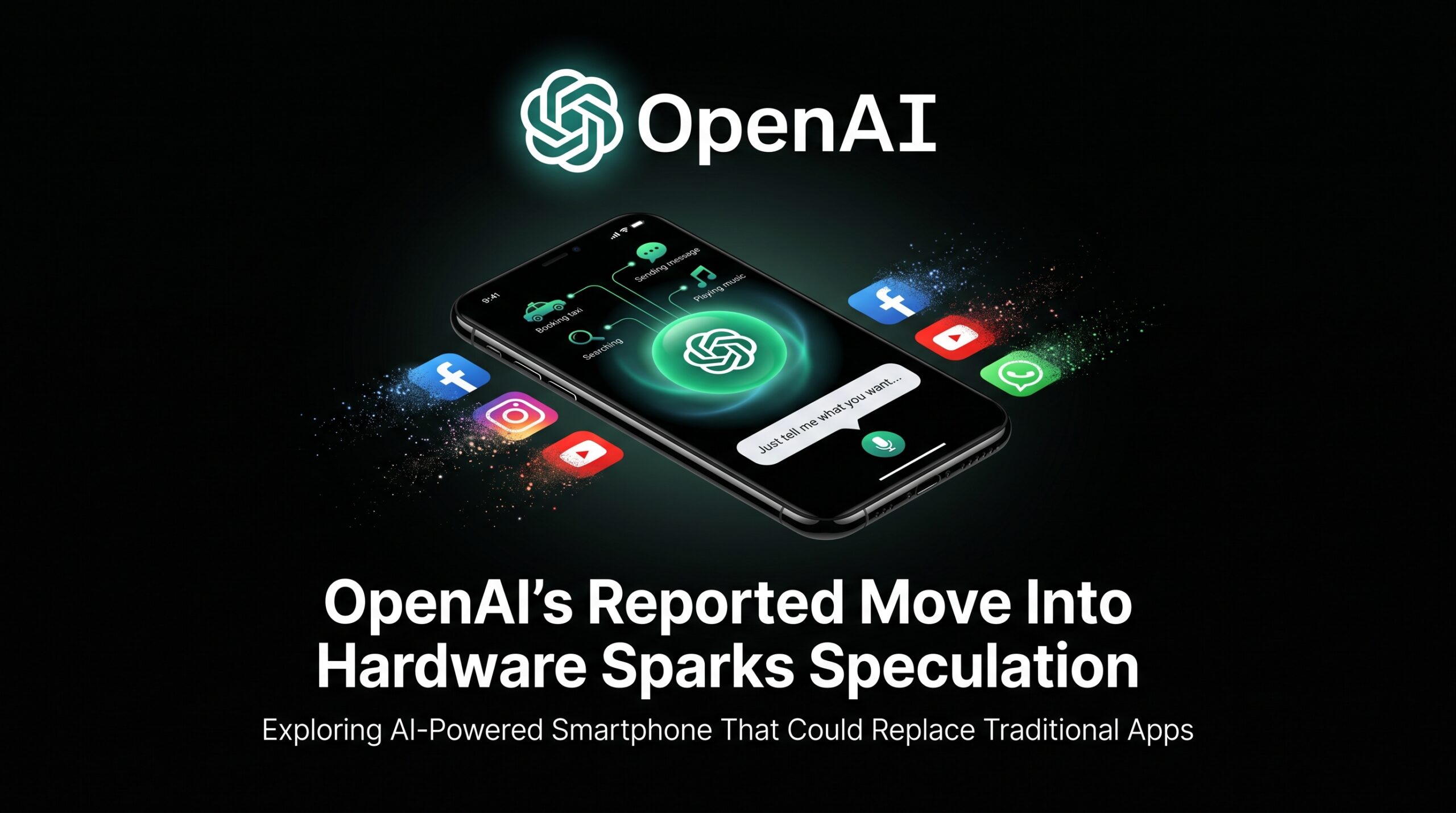
OpenAI is reportedly exploring the idea of an AI-powered smartphone that could significantly change how people use mobile devices by removing traditional apps and replacing them with AI-driven systems that handle tasks directly. While nothing has been confirmed, early reports and analyst commentary suggest the company may be quietly expanding its focus beyond software into consumer hardware.
The concept being discussed is fairly simple, but potentially disruptive. Instead of switching between multiple apps for things like messaging, booking rides, searching, or entertainment, users would interact with a single AI system that understands requests and completes actions across services automatically.
For example, instead of opening an app to book a taxi or send a message, users would simply tell the device what they want and the AI would handle the rest in the background.
So far, OpenAI has not officially announced any smartphone project, and there are no confirmed product details. Still, the idea has gained attention as part of a wider conversation around AI-first devices and the future of mobile computing.
A shift away from app-based smartphones
The speculation around an OpenAI phone connects to a much larger shift already happening in the tech industry.
For more than a decade, smartphones have been built around apps. Each task requires opening a separate application, whether it’s for communication, navigation, shopping, or media.
But AI systems are starting to challenge that structure.
An AI-first smartphone would flip this model. Instead of users navigating apps, the device would focus on understanding intent what the user actually wants and then carrying out the task across services in the background.
In this approach, apps would still exist, but they would become invisible infrastructure rather than something users actively interact with.
It’s a subtle but major shift from “open an app” to “just ask.”
Where the speculation is coming from
Most of the discussion around an OpenAI smartphone comes from analyst reports and industry speculation rather than official announcements.
Some analysts believe OpenAI could eventually explore hardware as a way to make its AI systems more deeply integrated into everyday use. There have also been mentions of possible partnerships within the semiconductor and manufacturing ecosystem, although none of these claims have been confirmed.
What’s driving the conversation is less about confirmed products and more about direction. OpenAI’s rapid progress in AI capabilities has led many to believe that hardware could eventually become a natural extension of its ecosystem.
Still, at this stage, everything remains speculative.
The broader push toward AI-first devices
Even without OpenAI, the industry is clearly moving in the direction of AI-first hardware.
Over the past few years, companies have started experimenting with devices that reduce reliance on traditional screens and app-based workflows. Some wearable AI products and standalone AI gadgets have already entered the market, though adoption is still early.
At the same time, major tech companies are embedding AI more deeply into smartphones and operating systems, making AI assistance a constant layer in the user experience rather than a separate tool.
The overall trend is clear AI is slowly shifting from being an “app you open” to something that runs continuously in the background.
What this could mean for Apple and Google
If a company like OpenAI were to seriously enter the smartphone space, it could challenge the current mobile ecosystem dominated by Apple and Google.
Today, both companies control not just the hardware and operating systems, but also the app stores that define how digital services are distributed.
An AI-first smartphone would potentially disrupt that model by reducing the importance of apps altogether and shifting control toward AI systems that manage tasks directly.
However, building a successful smartphone ecosystem is extremely complex. It requires hardware scale, developer support, distribution networks, and long-term user trust all of which take years to develop.
Still just speculation for now
Despite all the discussion, there is still no confirmed evidence that OpenAI is building a smartphone.
No official announcements have been made, no prototypes have been shown, and no technical specifications have been released.
Because of that, the idea remains in the early speculation phase interesting, plausible, but unverified.
What makes it so widely discussed, however, is that it fits perfectly into where the industry seems to be heading.