For years, premium laptops have dominated conversations around performance, battery life, and artificial intelligence features. Whether it was Apple’s MacBook lineup or Microsoft’s latest Copilot+ PCs, many of the most advanced computing experiences remained out of reach for budget-conscious buyers. Qualcomm now wants to change that equation.
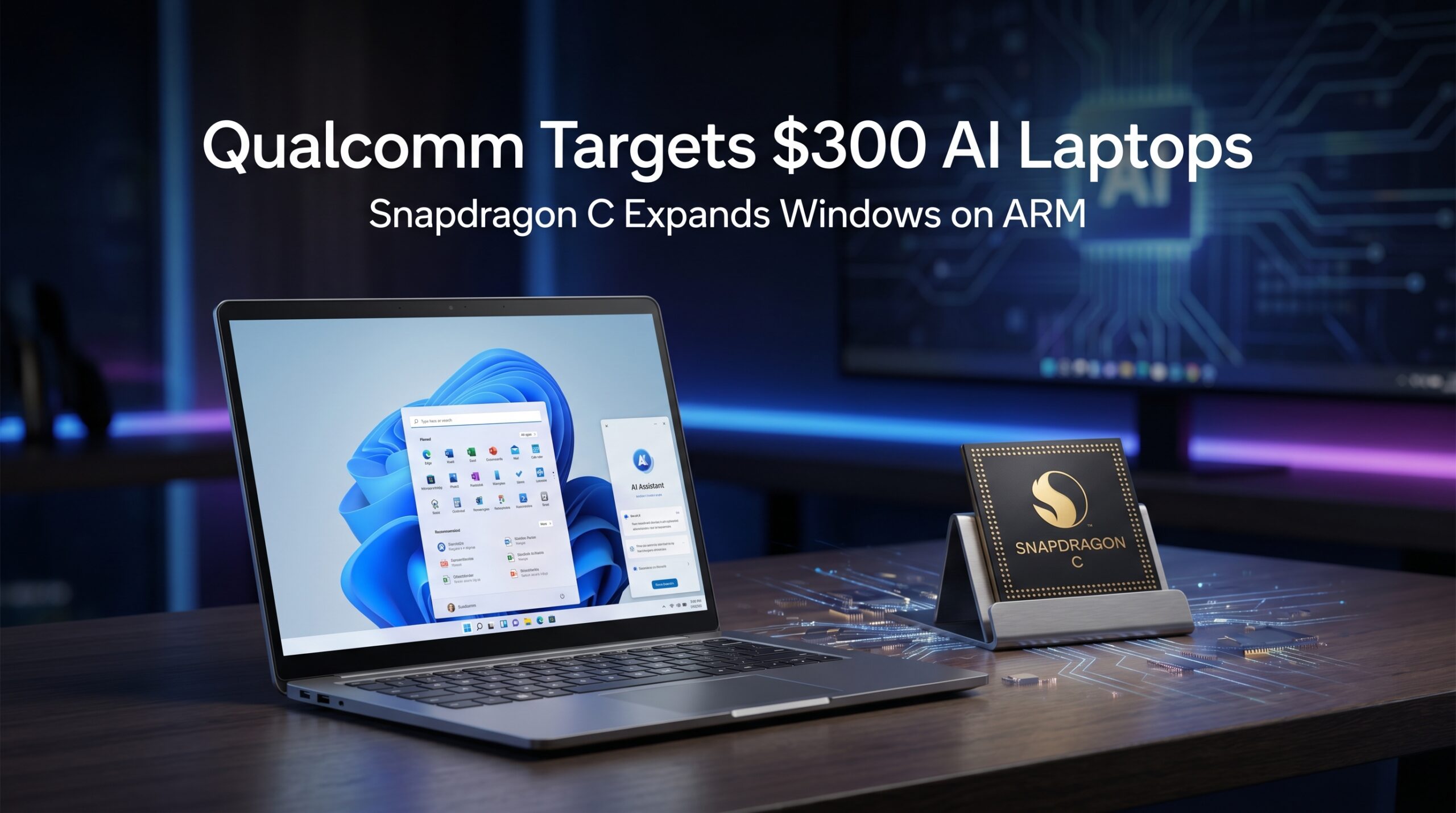
The chipmaker has officially unveiled its new Snapdragon C platform, a processor designed specifically for affordable Windows laptops that could start at around $300. The announcement marks a significant step in Qualcomm’s broader effort to bring ARM-based computing into the mainstream and expand the reach of AI-powered Windows devices beyond premium price segments.
While the launch may initially appear to be another chip announcement, industry analysts view it as part of a much larger battle over the future of personal computing. Qualcomm is not simply introducing a cheaper processor. It is attempting to reshape the entry-level laptop market by bringing features traditionally associated with high-end devices into significantly more affordable machines.
Qualcomm Wants to Make ARM Laptops Mainstream
The Snapdragon C platform represents Qualcomm’s latest push to expand the Windows on ARM ecosystem. ARM processors have become increasingly important in recent years thanks to their reputation for power efficiency, longer battery life, and cooler operation compared to traditional laptop chips.
Apple demonstrated the potential of ARM-based computing when it introduced Apple Silicon for MacBooks, delivering impressive performance while significantly improving battery life. Since then, Microsoft and Qualcomm have worked closely to strengthen Windows on ARM and encourage manufacturers to build more ARM-powered PCs.
Until now, however, most ARM-based Windows laptops have targeted higher price ranges. Qualcomm’s new Snapdragon C platform changes that strategy by focusing on affordable devices intended for students, families, small businesses, and everyday users.
The company believes the future growth of Windows on ARM will not come solely from premium laptops. Instead, widespread adoption will require bringing the technology into mainstream price categories where millions of consumers make purchasing decisions each year.
Why the $300 Price Point Matters
One of the biggest reasons this announcement has attracted attention across the technology industry is the proposed pricing.
According to Qualcomm, laptops powered by Snapdragon C could begin at approximately $300, placing them directly in competition with many Chromebooks and lower-cost Windows notebooks. At that price level, consumers are often forced to compromise on battery life, portability, or overall user experience.
Qualcomm is attempting to position Snapdragon C devices as a more modern alternative. Rather than competing purely on specifications, the company is focusing on practical benefits such as all-day battery life, thin and lightweight designs, instant responsiveness, and built-in AI capabilities.
For students, remote workers, and casual users, these qualities may prove more important than raw benchmark performance. A laptop that lasts throughout a school day or workday without needing a charger can have a greater impact on the user experience than marginal performance gains.
The aggressive pricing strategy also has broader implications for the PC industry. If manufacturers can deliver compelling ARM-based Windows laptops at around $300, it could accelerate consumer adoption of Windows on ARM much faster than premium devices alone.
The Growing Battle Between Qualcomm, Intel, and AMD
The launch of Snapdragon C also intensifies competition within the laptop processor market.
For decades, Intel and AMD have dominated Windows computing. Their processors power the overwhelming majority of laptops sold worldwide, particularly in the budget and mainstream segments.
Qualcomm is attempting to challenge that dominance by offering an alternative approach centered on efficiency and mobility. Instead of focusing solely on traditional performance metrics, Snapdragon chips emphasize battery longevity, integrated AI processing, and always-connected experiences.
This strategy has already gained momentum in premium AI PCs powered by Snapdragon X processors. The Snapdragon C platform now extends that vision into a more accessible price range.
While Intel and AMD continue introducing new AI-capable processors of their own, Qualcomm’s advantage lies in its deep experience designing energy-efficient mobile chips. The company hopes that expertise will help it attract users who prioritize portability and battery life over conventional desktop-class performance.
AI Features Are Reaching More Affordable Devices
Artificial intelligence has become one of the biggest themes in the personal computer industry over the past year. Nearly every major hardware company is investing heavily in AI-powered experiences, from productivity tools and creative applications to advanced search and workflow automation.
Historically, these features have been associated with premium laptops costing hundreds or even thousands of dollars. Qualcomm’s Snapdragon C platform signals a shift toward making AI capabilities available at much lower price points.
The company has emphasized that AI is no longer a feature reserved for flagship devices. As software developers increasingly integrate AI tools into everyday applications, affordable hardware capable of supporting those experiences could become increasingly important.
This trend is particularly relevant for education and small businesses, where cost often determines purchasing decisions. Bringing AI-ready devices to lower price categories could help broaden access to technologies that were previously limited to higher-end systems.
Cloud Partnerships Strengthen Qualcomm’s Position
Another important factor behind Qualcomm’s laptop strategy is the growing integration between AI hardware and cloud services.
Modern computing increasingly relies on a combination of local processing and cloud-based intelligence. As users interact with AI assistants, productivity platforms, and business applications, devices must efficiently handle both on-device and cloud-powered workloads.
Qualcomm’s broader ecosystem benefits from partnerships across the Windows and cloud computing landscape. As Microsoft continues expanding AI features within Windows 11, ARM-based hardware becomes an increasingly important part of the company’s long-term vision.
The Snapdragon C platform therefore represents more than a standalone chip launch. It forms part of a larger industry transition toward AI-powered, cloud-connected computing experiences.
Challenges Qualcomm Still Needs to Overcome
Despite the excitement surrounding Snapdragon C, questions remain about how quickly consumers will embrace budget ARM laptops.
One of the biggest concerns involves software compatibility. Although Windows on ARM has improved significantly in recent years, some applications still perform better on traditional x86 hardware from Intel and AMD.
Many technology enthusiasts also want to see real-world performance benchmarks before drawing conclusions about the platform’s competitiveness. Battery life and efficiency are important selling points, but users will ultimately judge these devices based on everyday experiences.
Pricing will also play a critical role. While Qualcomm has highlighted the possibility of $300 laptops, consumers will closely watch whether manufacturers can actually deliver compelling devices at that price without sacrificing quality.
These challenges are not unique to Qualcomm. Every major technology transition faces skepticism during its early stages. The company’s success will depend on whether Snapdragon C devices can deliver meaningful value rather than simply lower prices.
What This Means for the Future of Windows Laptops
The significance of Snapdragon C extends beyond a single processor launch. It represents another step toward a future where ARM-based computing becomes a mainstream part of the Windows ecosystem.
For years, ARM laptops were viewed as a niche category. Today, they are increasingly becoming central to conversations about battery life, AI capabilities, and next-generation computing experiences.
If Qualcomm succeeds in bringing capable ARM-powered Windows laptops to the $300 price range, it could influence how manufacturers design future devices and how consumers think about affordable PCs.
The move also reflects a broader shift within the technology industry. Companies are no longer focused solely on delivering faster hardware. Instead, they are prioritizing efficiency, mobility, AI integration, and user experience.
Looking Ahead
Qualcomm’s Snapdragon C platform may ultimately be remembered as more than just another processor announcement. By targeting affordable Windows laptops with ARM architecture and AI capabilities, the company is attempting to bring next-generation computing features to a much wider audience.
The success of that strategy will depend on device quality, software compatibility, and consumer adoption. However, the broader goal is clear: Qualcomm wants ARM-powered Windows laptops to move beyond premium niches and become a mainstream option for millions of users worldwide.
As manufacturers prepare their first Snapdragon C devices and competition intensifies across the PC market, the battle for the future of affordable computing is only beginning. If Qualcomm’s vision succeeds, the era of $300 AI-powered laptops could arrive sooner than many expected.