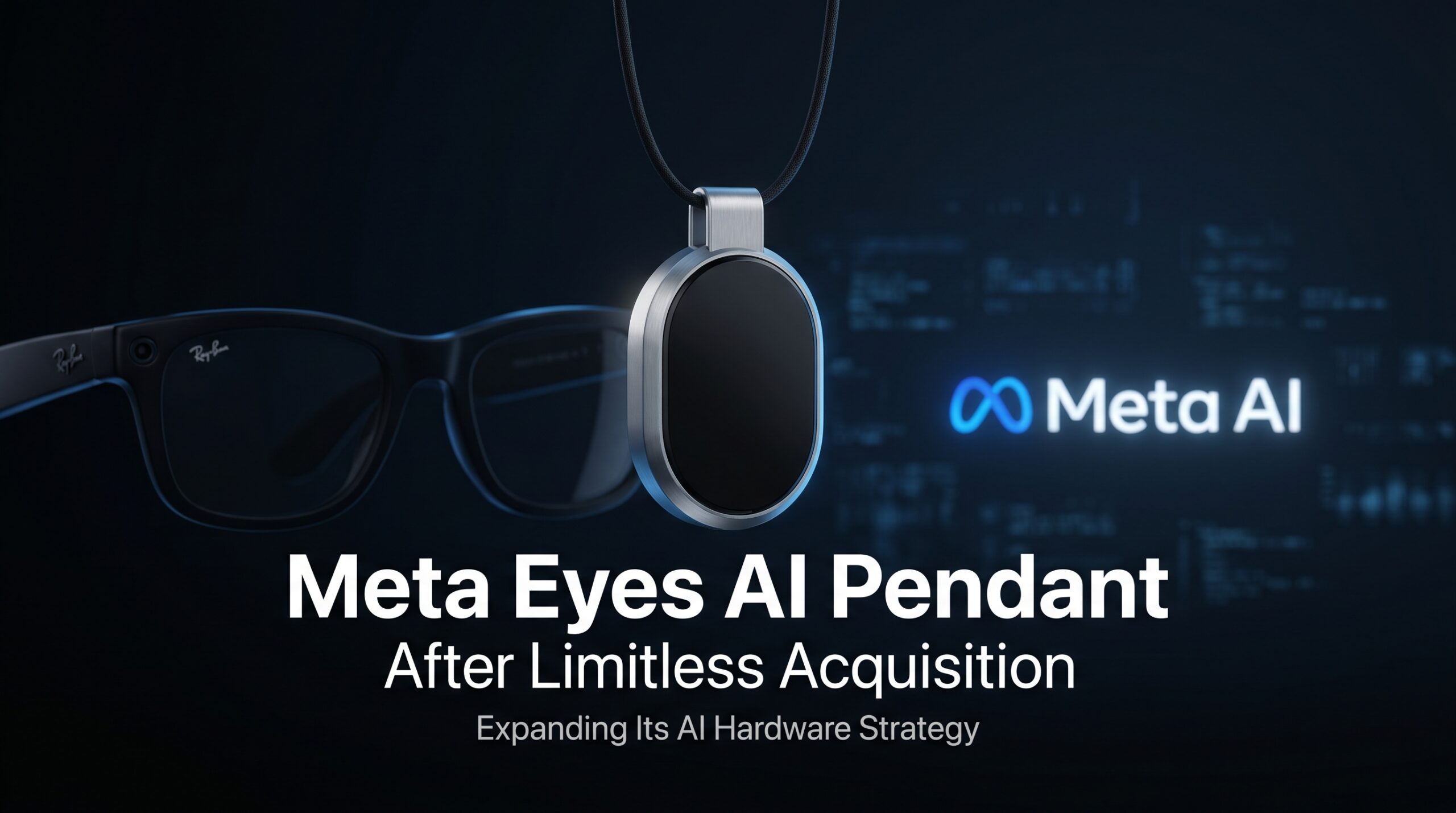
Meta is reportedly exploring an AI-powered pendant as part of an ambitious effort to expand its wearable technology portfolio, signaling that the company’s artificial intelligence strategy now extends far beyond chatbots, social media platforms, and smart glasses. While the pendant itself remains under development, the project offers a revealing look at how Meta envisions the future of personal AI devices.
The reported initiative arrives months after Meta acquired AI wearable startup Limitless, a company known for developing a pendant-style device capable of recording conversations, generating searchable transcripts, and creating AI-powered summaries. Although Meta has not confirmed whether its new pendant project is directly based on Limitless technology, the acquisition has fueled industry speculation that the company is laying the groundwork for a broader ecosystem of AI-powered wearables.
Taken together with Meta’s growing investment in smart glasses, artificial intelligence assistants, and next-generation hardware, the pendant project highlights the company’s determination to become a major force in what many analysts believe could be the next era of personal computing.
The Bigger Story Is Not the Pendant
At first glance, the reported AI pendant may appear to be just another experimental gadget. However, industry observers increasingly view it as part of a much larger transformation taking place across the technology sector.
For more than a decade, smartphones have served as the primary gateway to digital services. Whether users want directions, communication, entertainment, or AI assistance, most interactions begin by reaching for a phone.
Meta appears to be betting that future AI systems will work differently.
Instead of requiring users to constantly open apps and interact with screens, the company’s long-term vision appears focused on making AI continuously available through wearable devices. An AI pendant could potentially allow users to access information, receive assistance, capture notes, and interact with artificial intelligence throughout the day without relying entirely on a smartphone.
This concept aligns with a broader industry trend where major technology companies are exploring ways to integrate AI more naturally into everyday life.
Meta’s Limitless Acquisition May Explain the Strategy
One reason the pendant project has attracted significant attention is Meta’s acquisition of Limitless.
Founded as an AI-first hardware company, Limitless developed a wearable pendant designed to help users remember conversations, organize information, and create searchable records of meetings and daily interactions. The device was positioned as a personal AI memory assistant, reflecting a growing belief that artificial intelligence can become a persistent companion rather than a tool used only when needed.
Meta’s acquisition of the company immediately sparked speculation that wearable AI could become a larger part of the company’s hardware roadmap.
While Meta has not publicly connected the reported pendant project to Limitless technology, the acquisition provided Meta with expertise, engineering talent, and practical experience in building always-available AI devices. For many industry analysts, the connection is difficult to ignore.
The acquisition also fits Meta’s broader strategy of investing aggressively in technologies that could shape the next generation of consumer computing experiences.
Building on the Success of Ray-Ban Meta Smart Glasses
Meta’s wearable ambitions did not begin with the AI pendant.
Over the past several years, the company has invested heavily in smart glasses through its partnership with EssilorLuxottica, the owner of the Ray-Ban brand. The resulting Ray-Ban Meta smart glasses have become one of the most successful examples of consumer AI hardware currently available.
Unlike earlier generations of smart glasses, the latest Ray-Ban Meta devices combine cameras, voice controls, messaging capabilities, translation features, and Meta AI assistance within a familiar eyewear design.
The growing popularity of these products has helped validate Meta’s belief that wearable AI can become part of everyday life.
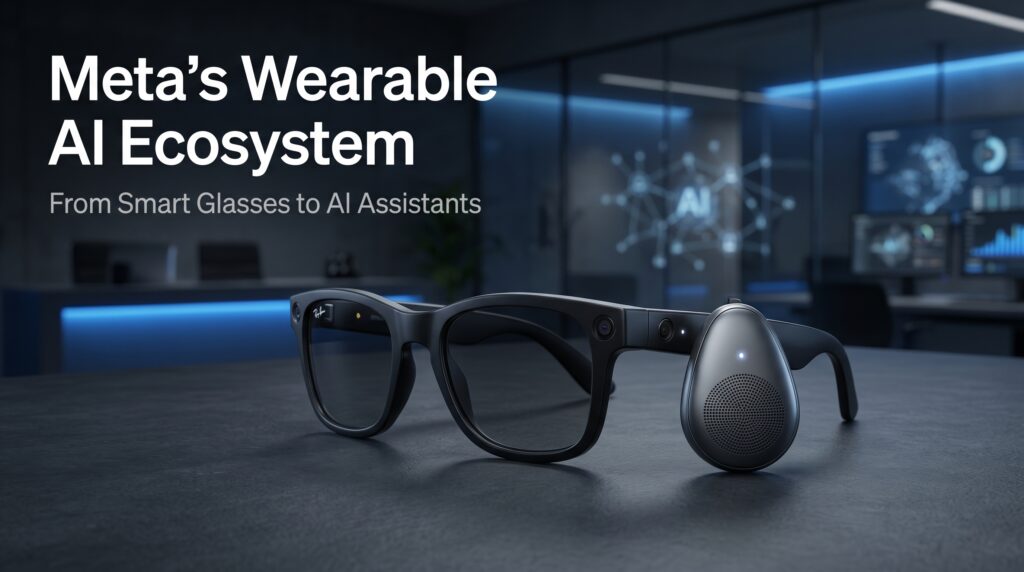
The reported pendant project appears to be another step in the same direction. Rather than replacing smart glasses, a pendant could potentially complement them as part of a broader ecosystem of interconnected AI devices.
This strategy would allow Meta AI to remain accessible across multiple form factors instead of being limited to smartphones or desktop applications.
Meta Wants AI Beyond Smartphones
The company’s wearable push reflects a larger objective that extends beyond hardware sales.
Meta is increasingly positioning its AI assistant as a central part of its ecosystem. The company has integrated Meta AI across Facebook, Instagram, WhatsApp, Messenger, and its smart glasses platform. Bringing AI into wearable devices would further expand that reach and create more opportunities for users to interact with Meta’s services throughout the day.
Many technology executives believe future AI assistants will function less like standalone apps and more like continuous digital companions capable of understanding context, remembering information, and providing assistance whenever needed.
Wearable devices such as pendants, glasses, earbuds, and future hardware categories could become the primary way users access those capabilities.
For Meta, owning both the AI software and the hardware delivering those experiences could provide a significant competitive advantage.
The Wearable AI Race Is Intensifying
Meta is far from alone in pursuing wearable AI.
Across the technology industry, companies are increasingly exploring devices designed to move artificial intelligence beyond traditional screens. Apple is reportedly researching future AI-enabled wearables, while Google continues integrating Gemini across multiple hardware categories. OpenAI has also signaled growing interest in consumer hardware as part of its long-term strategy.
This competition reflects a broader belief that artificial intelligence may ultimately transform how people interact with technology.
Rather than opening applications manually, users may increasingly rely on AI systems capable of understanding requests, anticipating needs, and providing assistance in real time.
Wearables are viewed by many analysts as one of the most promising ways to achieve that vision.
Privacy Concerns Remain a Major Challenge
Despite the excitement surrounding wearable AI, privacy concerns continue to follow the category.
Devices capable of continuously listening, recording, or analyzing conversations inevitably raise questions about data collection, consent, and surveillance. Meta has faced scrutiny over privacy issues in the past, making trust a particularly important factor as the company expands its wearable ambitions.
The concerns are not limited to Meta. Similar debates have emerged around nearly every AI wearable introduced in recent years.
As companies push toward more advanced personal AI assistants, balancing convenience with transparency will likely become one of the industry’s biggest challenges.
The success of future AI wearables may depend not only on technological capabilities but also on whether consumers feel comfortable using them in daily life.
What This Means for the Future of AI Hardware
The reported AI pendant is significant because it represents more than a single product.
It offers a glimpse into how Meta sees the future of artificial intelligence and personal computing. By combining the capabilities of Meta AI, the experience gained through Ray-Ban Meta smart glasses, and the expertise acquired through Limitless, the company appears to be building an ecosystem where AI remains constantly available across multiple devices.
Whether the pendant ultimately reaches consumers remains uncertain. However, the broader direction is becoming increasingly clear.
Meta wants artificial intelligence to move beyond phones, beyond apps, and beyond traditional computing interfaces. The company’s growing wearable portfolio suggests it believes the next major technology platform could be something people wear rather than something they carry.
As competition intensifies between Meta, Apple, Google, OpenAI, and other technology leaders, the race to define the future of AI hardware is only beginning. The reported AI pendant may be one of the clearest signs yet that wearable artificial intelligence is moving from experimentation toward the mainstream.