The Mechanics of FAST: Inside the Real-Time Bidding (RTB) Architectures of Free Streaming Tiers
Introduction: The Rise of FAST and the Ad-Supported Streaming Boom
Cord-cutting has entered a new era. Audiences are fleeing subscription fatigue and flocking to Free Ad-supported Streaming TV (FAST) platforms like Pluto TV and Tubi.
But behind this seamless, lean-back viewer experience lies a massive engineering challenge. Unlike traditional cable, every ad break on a FAST channel is dynamically generated and personalized for individual viewers in milliseconds.
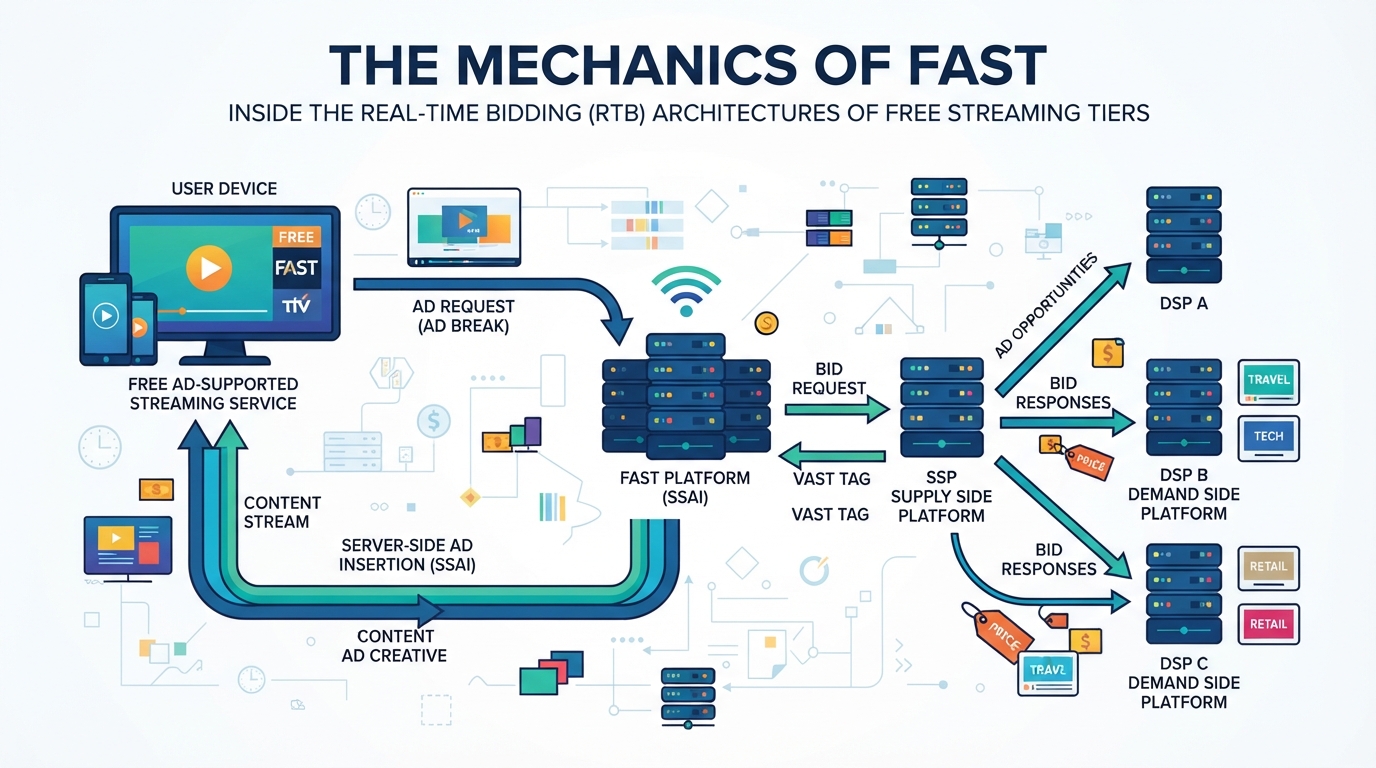
To pull this off, modern FAST platform architecture relies on a highly sophisticated real-time bidding architecture. This infrastructure coordinates complex data exchanges while the stream is active, including:
- Server-Side Ad Insertion (SSAI): Stitching targeted ads directly into the video stream to prevent buffering.
- Ad Decision Servers (ADS): Instantly matching viewer profiles with available inventory.
- Sub-100ms Auctions: Executing lightning-fast bidding wars between SSPs and DSPs.
Let’s look under the hood at how these systems deliver broadcast-quality streams without missing a beat—or a dollar.
Understanding Real-Time Bidding Architecture in FAST
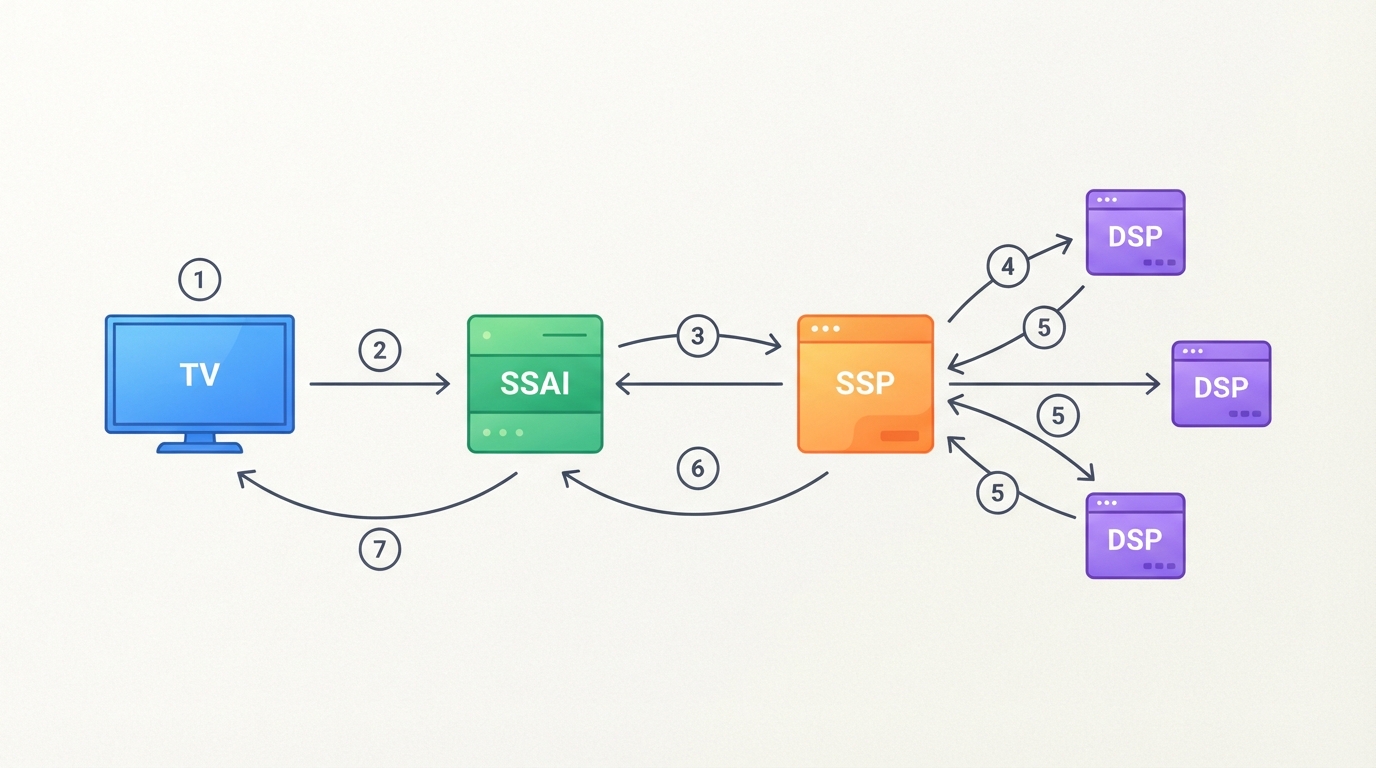
To orchestrate this, the real-time bidding architecture triggers a rapid-fire sequence the moment an ad marker is detected in the stream:
1. The Request: The SSAI server sends a call to the Supply-Side Platform (SSP) containing viewer metadata.
2. The Auction: The SSP packages this data into the OpenRTB protocol format and broadcasts it to multiple Demand-Side Platforms (DSPs).
3. The Response: DSPs submit their bids, the SSP selects the winner, and the ad stitches back into the stream—all within 100 milliseconds.
While similar to web-based programmatic auctions, CTV environments have much stricter operational demands:
- Zero Latency: Web ads can load late; a FAST stream will buffer or go black, instantly killing the user experience.
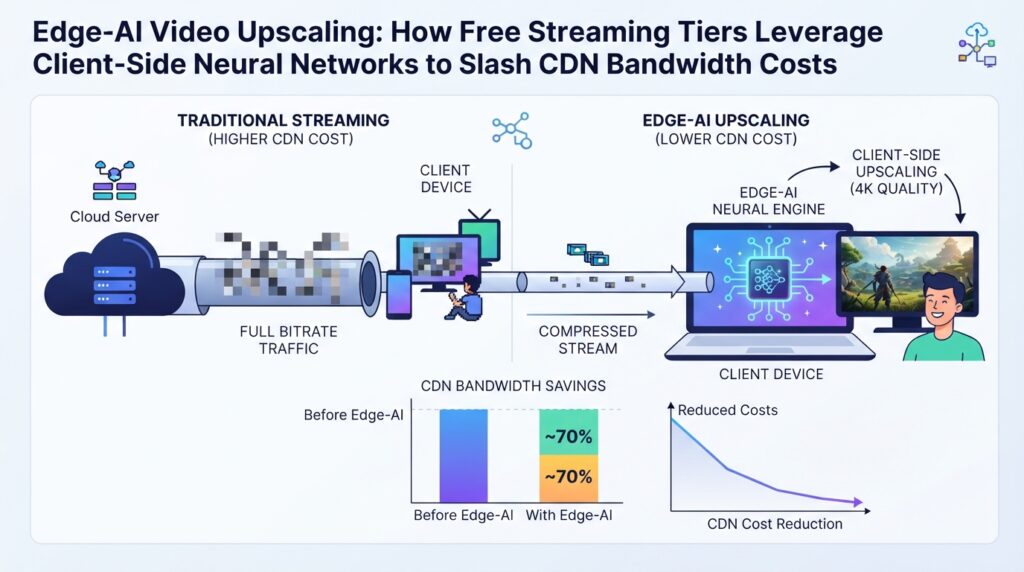
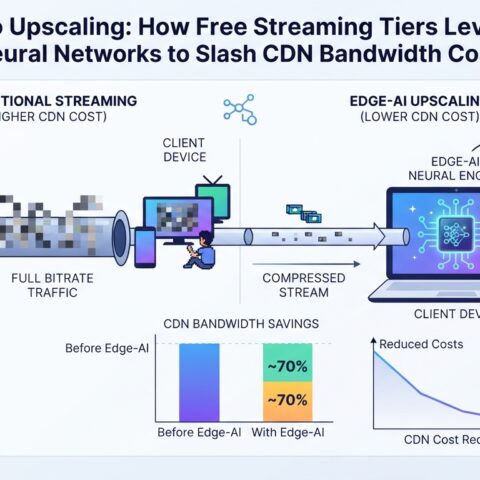
- Creative Verification: CTV requires heavy, broadcast-quality HD video assets to be pre-transcoded and validated before they can air. To mitigate the delivery costs of these high-resolution streams, some platforms are exploring edge-AI video upscaling to slash CDN bandwidth costs.
- Ad Podding: Unlike single web banners, FAST auctions must resolve entire commercial breaks (pods) sequentially without repeating the same ad.
The Role of Server-Side Ad Insertion (SSAI) in Maintaining Broadcast Quality
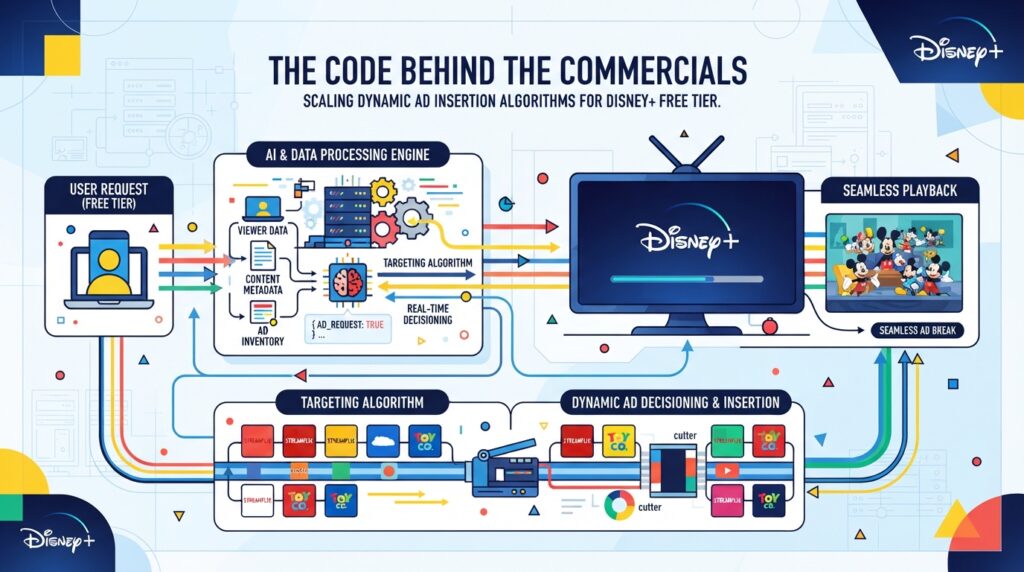
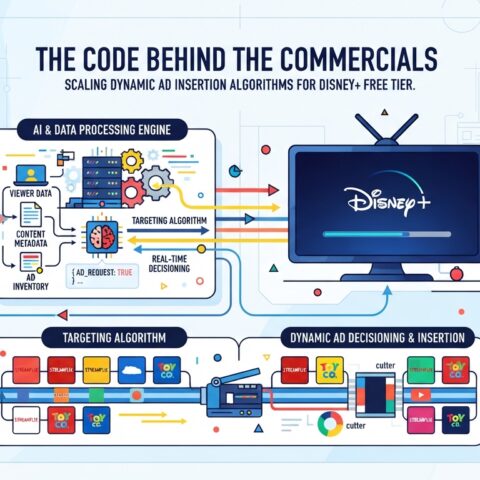
To keep the stream running like traditional TV, a modern FAST platform architecture relies on Server-Side Ad Insertion (SSAI). Often called “manifest manipulation,” SSAI acts as the ultimate mediator between the live video stream and the ad decision server (ADS). This is similar to how major premium services scale, such as Disney+’s dynamic ad insertion algorithms designed for their ad-supported tiers.
Instead of forcing the viewer’s device to pause the show, request an ad, and buffer—a clunky process known as client-side insertion—SSAI handles the heavy lifting in the cloud.
Here is how it keeps the broadcast seamless:
- Single Stream Delivery: It stitches the program and the winning ad into a unified video stream before it ever reaches the screen.
- Zero-Buffer Transitions: The player on your Smart TV only sees one continuous stream, eliminating the dreaded “black screen” lag.
- Unified Formatting: Server-Side Ad Insertion normalizes different ad volume levels and video resolutions to match the main broadcast quality.
By moving the complexity off the user’s device and onto the server, SSAI preserves the premium, lean-back experience that viewers expect from traditional television.
How SSAI Prevents Buffering and Dead Air
To pull off this magic trick without a hiccup, SSAI relies on a process called manifest manipulation. Instead of splicing the actual video files together on the fly—which would require massive computing power—the server operates at the playlist level.
Here is how the underlying architecture achieves latency mitigation in milliseconds:
1. Manifest Rewriting: The server intercepts the playback request and rewrites the HLS or DASH manifest file, seamlessly inserting ad segment URLs directly into the content stream.
2. Ad Transcoding: Before insertion, the ad decision server ensures the commercial’s bitrate, frame rate, and profile match the main program exactly.
3. Continuous Playback: The viewer’s device simply reads the next line of code in the playlist, unaware that it has transitioned from a Hollywood movie to a commercial.
By handling the heavy lifting during the manifest phase, SSAI ensures there are no sudden drops in bandwidth or decoding errors, preserving that classic TV flow.
Overcoming the Latency Challenge: Sub-100ms Auctions
While SSAI keeps the stream smooth, the real pressure cooker is the ad decisioning engine. In the world of CTV ad tech, you have a hard ceiling of 100 milliseconds to run an auction, select a winner, and return the creative. This makes solving the latency challenge in FAST and CTV programmatic auctions a top priority for engineering teams.
To meet this brutal deadline, modern architectures rely on three core latency mitigation strategies:
- Edge-Based Orchestration: SSPs deploy regional bidding endpoints close to major DSPs, cutting physical fiber travel time down to single-digit milliseconds.
- Optimized Serialization: Utilizing lightweight serialization formats like Protocol Buffers (Protobuf) instead of bulky JSON to stream OpenRTB protocol payloads instantly.
- Pre-bid Predictive Modeling: Machine learning models predict ad breaks seconds before they occur, triggering the auction ahead of the actual cue tone.
By shaving microseconds off every network hop, FAST platforms ensure the auction finishes before the viewer even realizes it started.
Key Infrastructure: Redis Caching and Kubernetes Orchestration
To survive the brutal traffic spikes of live television, a modern real-time bidding architecture must decouple data retrieval from active processing. This is where Redis and Kubernetes (K8s) form the ultimate high-throughput tag team.
- In-Memory Pre-Bid Caching: Redis acts as the ultra-low latency storage layer. By implementing pre-bid caching, platforms store device graphs, user consent states, and frequency-capping data in-memory. This eliminates slow database queries, allowing the ad engine to fetch critical targeting data in under 2 milliseconds.
- Kubernetes Auto-Scaling: Viewer concurrency on FAST platforms is highly volatile. Kubernetes orchestrates stateless bidding engines, using custom metrics like HTTP request queues to auto-scale pods in seconds.
| Component | Primary Role | Latency Impact |
|---|---|---|
| Redis Cluster | Pre-bid caching of user and device data | < 2ms retrieval |
| Kubernetes Pods | Auto-scaling stateless bidding engines | Instant horizontal scaling |
This combination ensures that whether ten thousand or ten million viewers hit an ad break simultaneously, the infrastructure scales dynamically without dropping a single bid.
Parallel Multi-SSP Auctions and Predictive Routing
To maximize ad revenue without causing stream buffering, FAST platforms abandon old-school, sequential waterfalling. Instead, they trigger parallel programmatic auctions, blasting bid requests to dozens of Supply-Side Platforms (SSPs) simultaneously.
However, broadcasting to every partner at once creates massive network overhead. Platforms solve this by deploying predictive routing algorithms as a core strategy for latency mitigation. These smart engines analyze historical data in real-time to query only the SSPs with the highest probability of filling the slot.
The routing engine dynamically filters partners based on three key signals:
- Historical Bid Value: Prioritizing partners with the highest win-rates for similar inventory.
- Current Response Times: Temporarily bypassing SSPs experiencing network slowdowns.
- Device and Geo Match: Routing requests to SSPs with active, localized demand campaigns.
This intelligent pruning keeps the entire auction cycle under 300 milliseconds, securing high fill rates while protecting the broadcast-quality viewing experience.
Conclusion: The Future of Programmatic CTV and FAST Infrastructure
As FAST platforms scale, the line between traditional broadcast and digital programmatic continues to blur. Delivering a seamless, buffer-free ad break requires more than just basic ad insertion—it demands a highly optimized real-time bidding architecture.
To survive in this competitive landscape, publishers must treat their CTV ad tech stack as mission-critical infrastructure. The future of sustainable FAST monetization relies on three core pillars:
- Infrastructure Elasticity: Handling massive, unpredictable viewer spikes during live events without dropping ad requests.
- Smarter Yield Optimization: Balancing programmatic density with strict latency budgets to prevent viewer churn.
- SaaS Efficiency: Minimizing cloud computing and egress costs while maximizing fill rates.
Ultimately, the winners in the FAST space won’t just have the best content. They will possess the most sophisticated, robust ad-tech pipelines capable of merging television-grade quality with programmatic precision.