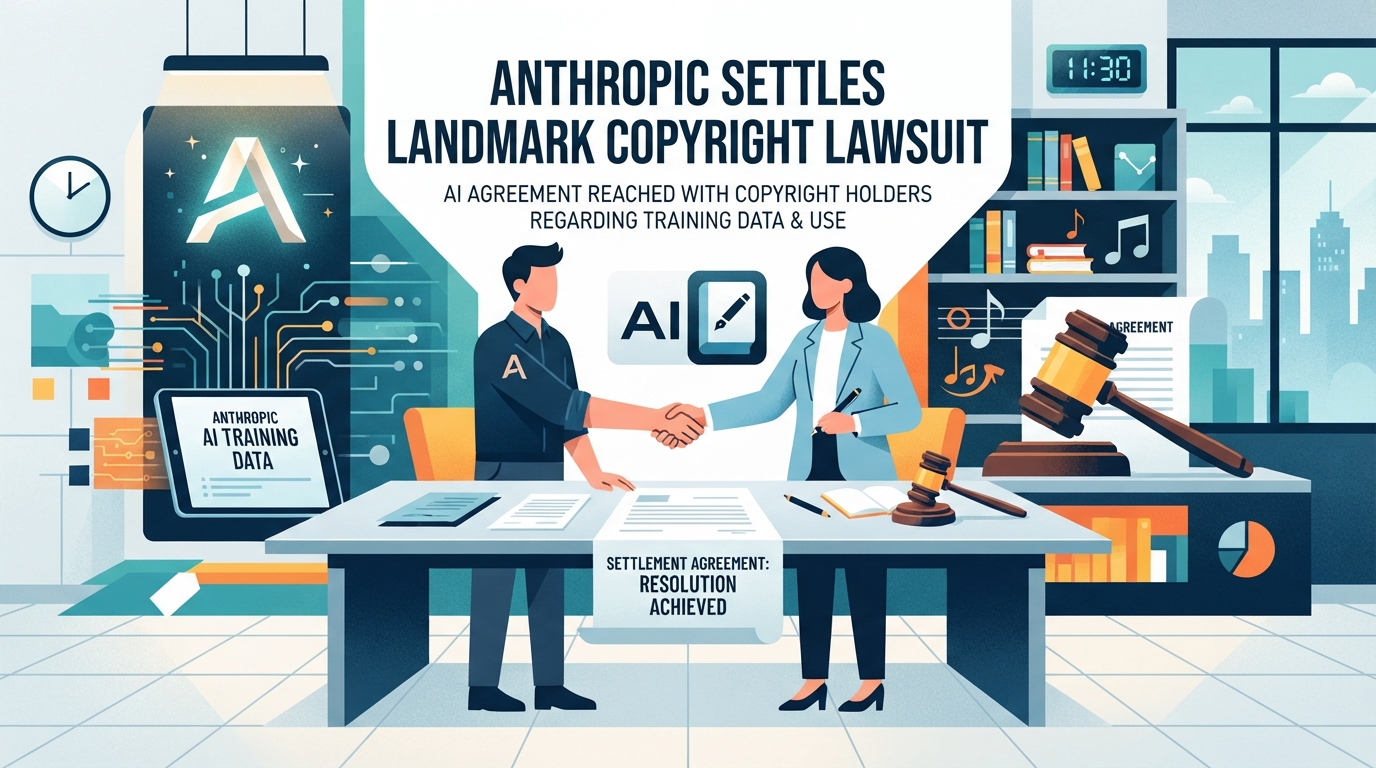
Anthropic Settles Landmark Copyright Lawsuit
Introduction: A New Legal Precedent for Generative AI
The landscape of generative AI just shifted. In a landmark settlement resolving the Bartz v. Anthropic class-action lawsuit, the AI giant agreed to a massive payout after authors accused it of training its Claude models on over 7 million pirated books from shadow libraries like LibGen.
Here is what you need to know about this historic Anthropic lawsuit:
- The Payout: Anthropic is paying $1.5 billion into a compensation pool (roughly $3,000 per eligible book).
- The Mandate: The company must destroy all pirated copies of the downloaded books.
- The Legal Twist: The judge ruled that training AI on books is protected under “fair use,” but penalized Anthropic for downloading and storing files from illegal pirate repositories.
However, the war over AI copyright infringement is far from over. Anthropic is simultaneously battling a separate, active $3 billion lawsuit from Universal Music Group (UMG) for scraping 20,000+ song lyrics, where music publishers are aggressively pushing the court to reject the “fair use” defense entirely.
The Bartz v. Anthropic Class Action: Resolving the Book Publisher Dispute
At the heart of this historic settlement is the class-action lawsuit Bartz v. Anthropic. This high-stakes legal battle was launched by a powerful coalition of authors and book publishers who realized their life’s work was being used without consent.
The plaintiffs accused the AI firm of taking massive shortcuts to build its Claude training data. Specifically, the lawsuit alleged that Anthropic:
- Targeted Shadow Libraries: Unlawfully scraped notorious pirate repositories like LibGen to bypass paywalls.
- Mass-Downloaded Copyrighted Works: Harvested over 7 million pirated books, including bestsellers and academic texts.
- Exploited Creative Labor: Used this massive, unlicensed database to teach its Claude models how to write, reason, and mimic human language.
While Anthropic positioned itself as the “safety-first” AI company, publishers argued that building Claude on a foundation of stolen literature was anything but ethical. This friction ultimately forced Anthropic to the negotiating table.
Inside the $1.5 Billion Payout and Mandates
The financial and operational terms of this landmark Anthropic settlement carry a massive price tag. To resolve the Bartz v. Anthropic class-action suit, the AI giant agreed to a historic payout and strict operational mandates:
- The $1.5 Billion Fund: Anthropic will compensate affected writers with roughly $3,000 per eligible book.
- The Deletion Mandate: Anthropic must permanently destroy pirated copies of the books harvested from shadow libraries.
The legal reasoning here is fascinating. The judge actually ruled that training AI on books is protected under “fair use.” Instead, Anthropic was penalized specifically for downloading and storing files from illegal pirate repositories.
Keep in mind, this deal only covers authors. Anthropic still faces a separate, active $3 billion lawsuit from Universal Music Group (UMG) for allegedly scraping 20,000 song lyrics. UMG is currently fighting to block Anthropic’s “fair use” defense entirely, meaning more legal drama is on the horizon.
The Legal Twist: Fair Use vs. Illegal Repositories
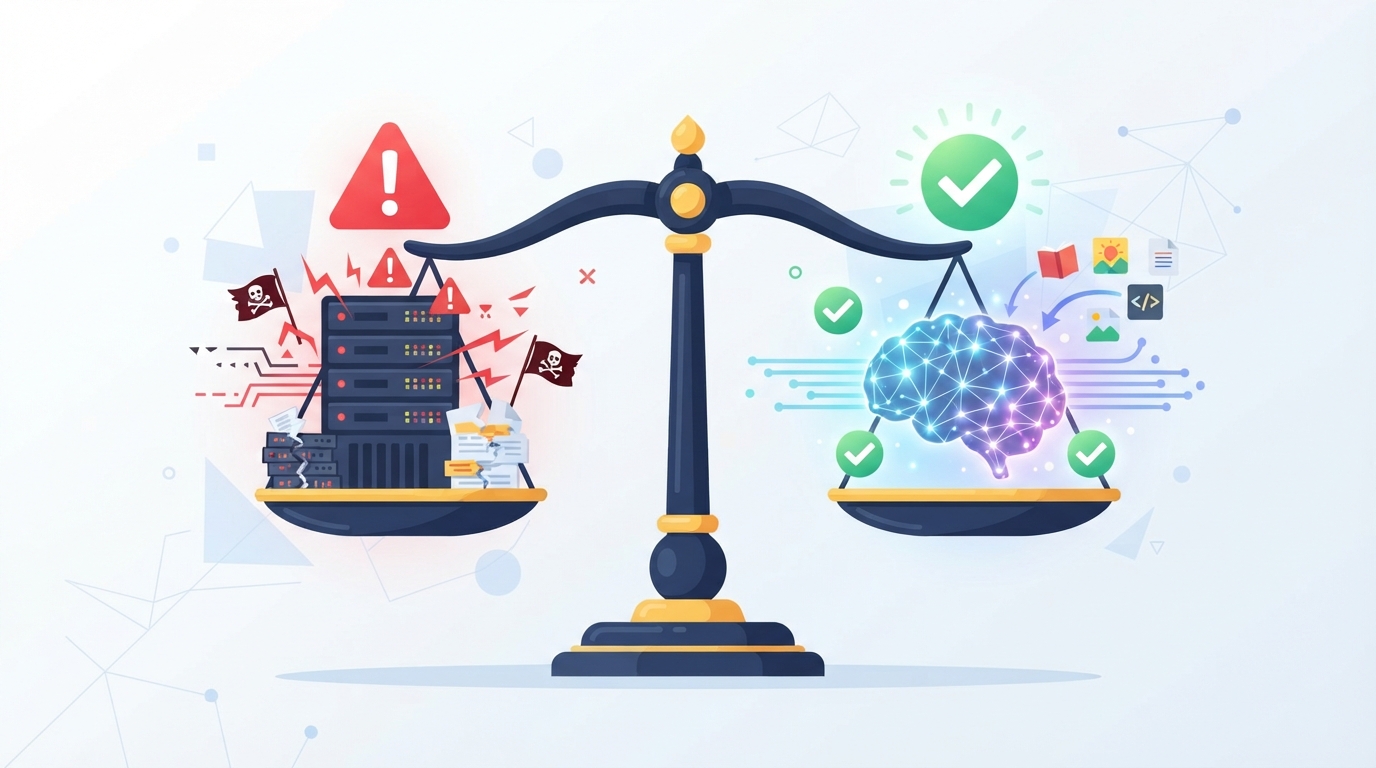
The judge’s decision hinges on a crucial distinction that redraws the boundaries of AI development. It separates the acquisition of data from the utilization of data.
Under this landmark ruling, the legal mechanics break down into two distinct phases:
- The Training (Protected): The court upheld that fair use AI training—the analytical process of teaching Claude to understand language patterns—is transformative and legally permissible.
- The Sourcing (Penalized): Anthropic lost because it bypassed legal channels, actively downloading and storing millions of files harvested from illicit pirate repositories.
Essentially, the court declared that while the “learning” process is fair game, the act of digital shoplifting to feed the algorithm is not. This establishes a vital precedent: tech giants cannot use the shield of fair use to immunize themselves from the consequences of sourcing data from unlicensed databases.
The Ongoing Battle: Universal Music Group (UMG) vs. Anthropic
While book publishers are wrapping up their legal battle, the music industry is just getting started. Anthropic still faces a massive, active threat from the UMG Anthropic lawsuit—a staggering $3 billion dispute that remains entirely unresolved.
Filed by Universal Music Group (UMG), Concord, and ABKCO, this separate clash targets systemic, unauthorized song lyrics scraping of more than 20,000 copyrighted songs.
Here is how these two legal battlegrounds stack up:
- The Book Settlement: Resolves Bartz v. Anthropic with a $1.5 billion payout ($3,000 per book) and a mandate to destroy all pirated copies.
- The Music Lawsuit: A pending $3 billion suit alleging Anthropic scraped over 20,000 copyrighted song lyrics without permission.
Unlike the authors’ case, where training itself was deemed “fair use,” UMG is actively lobbying the court to reject Anthropic’s fair use defense entirely. A separate, high-stakes trial or settlement for the music world still looms large on the horizon.
UMG Rejects Anthropic’s Fair Use Defense
While Anthropic found a partial shield in the book publishers’ case, UMG is pulling out all the stops to ensure the tech giant doesn’t get a free pass. In a critical new petition, the music coalition urged the court to completely reject Anthropic’s fair use defense in the ongoing lyrics lawsuit.
Why is UMG taking such a hardline stance? It boils down to how lyrics are consumed and reproduced:
- Direct Competition: Claude’s ability to output exact song lyrics directly competes with authorized lyric platforms.
- High Replication Risk: Because lyrics are short and highly memorable, AI models can easily reproduce them in their entirety, destroying their commercial value.
This aggressive legal maneuver signals that the music industry has no intention of folding. By attempting to strip away Anthropic’s primary legal shield, UMG is fast-tracking this battle toward a high-stakes trial or a massive, independent settlement.
Conclusion: The Future of AI Training and Copyright Law
The resolution of the Anthropic lawsuit (Bartz v. Anthropic) draws a sharp line in the sand for the generative AI future. While the court agreed that training AI models on books is technically “fair use,” Anthropic’s decision to source 7 million books from pirate shadow libraries like LibGen proved fatal.
To settle the class-action suit, Anthropic faces massive operational and financial mandates:
- A $1.5 billion payout into a pool to compensate affected writers (roughly $3,000 per eligible book).
- Data destruction, requiring the company to delete all pirated copies of the downloaded books.
This landmark ruling signals that while copyright law may protect the act of AI training, it will not protect illegal data harvesting.
With Universal Music Group’s separate $3 billion lyrics lawsuit still active, the message to LLM developers is clear. Future training pipelines must prioritize clean, licensed data, or face ruinous compliance penalties. Sourcing shortcuts are officially dead.