Sovereign AI Infrastructure: Why Nations Are Building Localized GPU Clouds After NVIDIA’s Japan Push
Introduction: The Rise of Sovereign AI Infrastructure
For decades, the playbook for digital growth was simple: plug into US-based hyperscalers and let the data flow. But as artificial intelligence transforms from a tech novelty into a pillar of national security, that centralized model is cracking.
Enter sovereign AI infrastructure—a nation’s self-contained pipeline of data, algorithms, and computing power managed entirely within its own borders.
Geopolitical tensions and strict data privacy laws are pushing governments to reclaim their digital autonomy. Instead of relying on foreign tech giants, nations are rapidly building localized GPU clouds to secure their technological future.
This shift is driven by three critical imperatives:
- Data Sovereignty: Keeping sensitive citizen and state data out of foreign jurisdictions.
- Cultural Preservation: Training LLMs on local languages and societal values, not just Western datasets.
- Supply Chain Security: Guaranteeing uninterrupted access to high-performance compute during global crises.
The Catalyst: NVIDIA’s Landmark Partnership in Japan
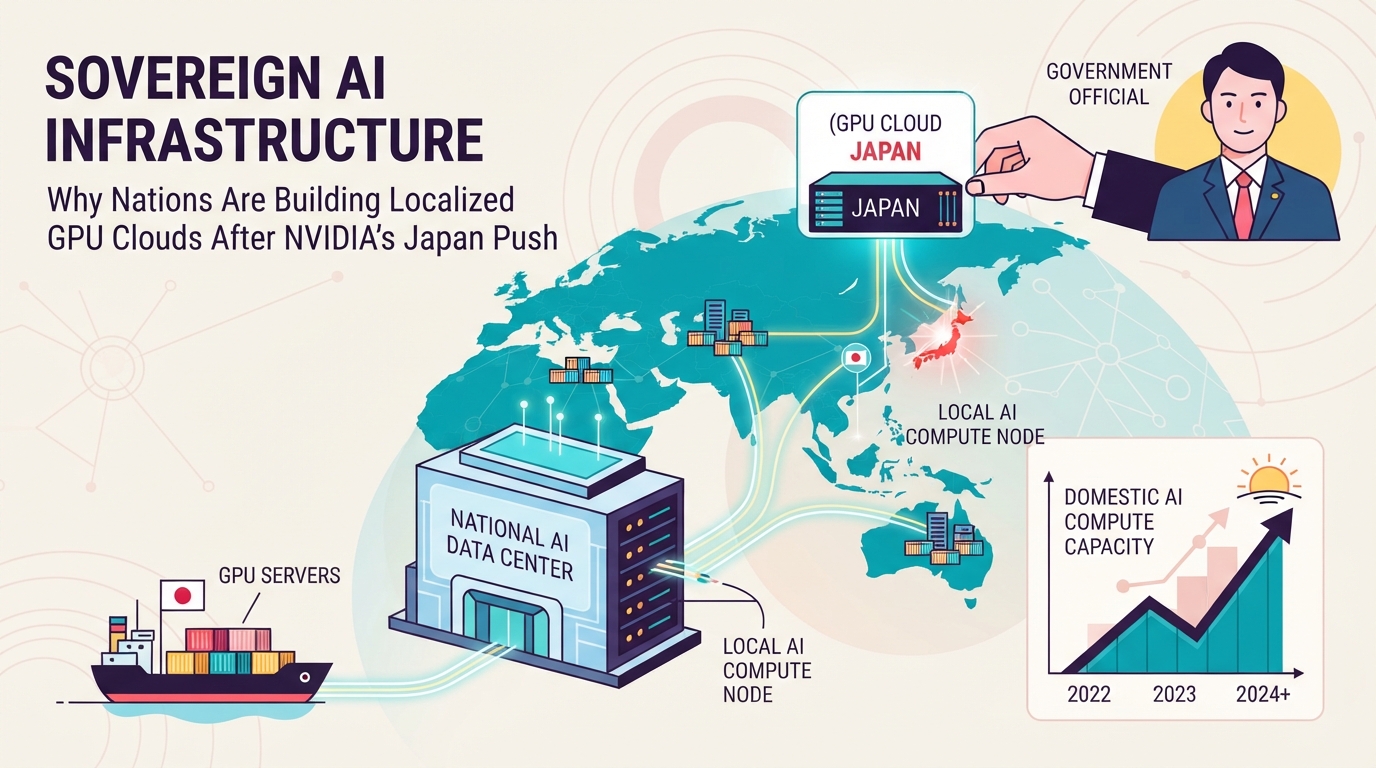
While the concept of sovereign AI was theoretical for years, Japan recently turned it into a reality. The turning point came when the Japanese Ministry of Economy, Trade and Industry (METI) heavily subsidized a landmark collaboration between NVIDIA and local cloud provider Sakura Internet.
This wasn’t just a standard business deal; it was a state-backed mission to secure Japan’s digital future. Through this partnership, Sakura Internet is deploying state-of-the-art NVIDIA HGX H100 systems to anchor the country’s first major sovereign AI cloud.
This massive hardware injection accelerates Japan’s strategy in three ways:
- Boosting Domestic AI Capabilities: Local researchers can now train Japanese-specific LLMs without relying on US-hosted cloud infrastructure.
- Democratizing High-Performance Compute: METI’s financial backing ensures local startups and academic institutions get affordable access to world-class silicon.
- Securing Technological Autonomy: By hosting these GPUs locally, Japan insulates its tech ecosystem from future geopolitical supply shocks.
This decisive move created a global blueprint, proving that computing power is now a matter of national security.
Why Nations Are Demanding Localized GPU Clouds
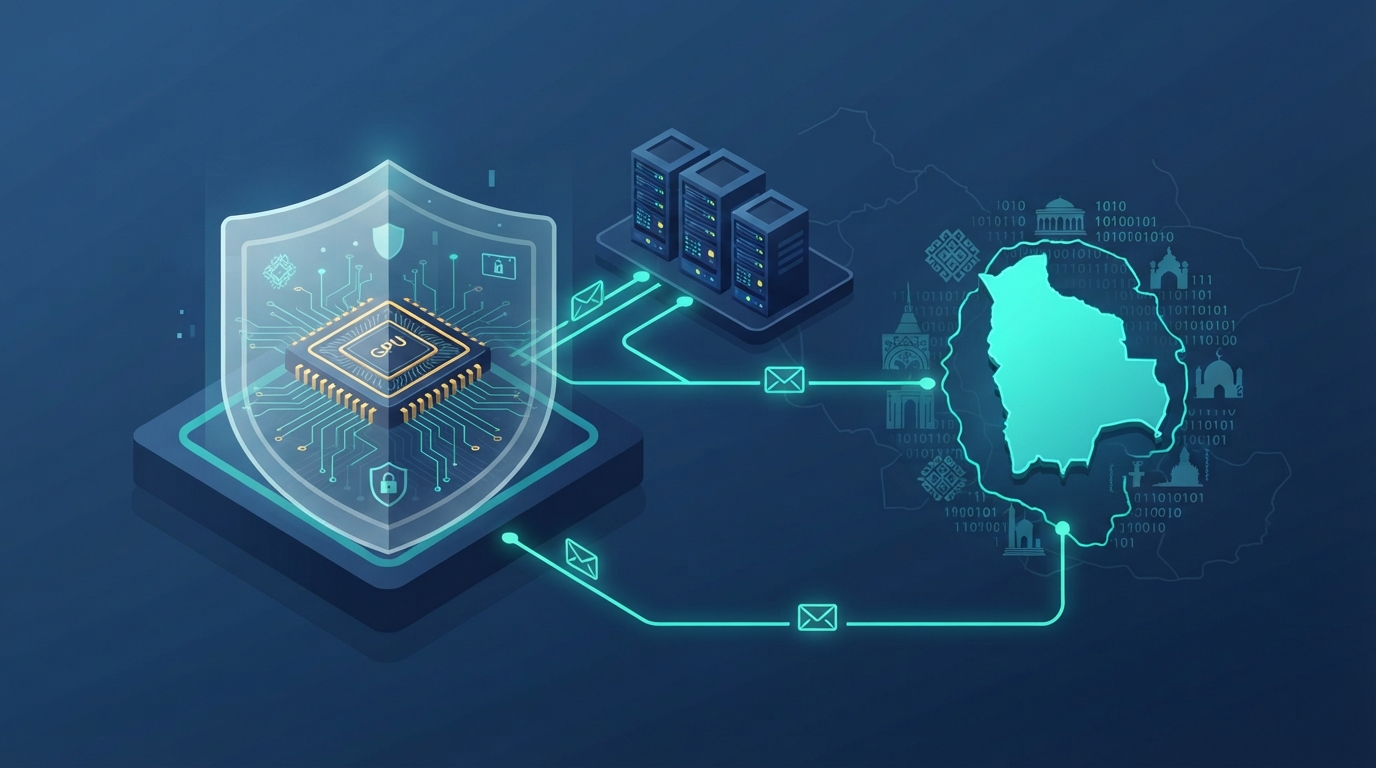
The global scramble for AI dominance has transformed raw compute from a tech luxury into a core pillar of national sovereignty. As rising geopolitical tensions threaten global supply chains, relying solely on foreign hyperscalers is increasingly viewed as an unacceptable risk.
To mitigate this vulnerability, governments are aggressively funding localized GPU clouds to keep their data, processing power, and intellectual property strictly within physical borders.
This urgent shift is driven by three critical national pressures:
- Data Sovereignty: Keeping sensitive citizen data and national security intelligence safe from foreign surveillance and jurisdictions.
- Cultural Preservation: Training LLMs on local languages and cultural nuances, bypassing the inherent biases of Western-centric models.
- Economic Resilience: Preventing “brain drain” by providing domestic startups with the high-performance compute needed to build homegrown AI industries.
Ensuring Data Residency and Regulatory Compliance
Navigating the global regulatory landscape has become a legal minefield for enterprises and public sector agencies. Relying on foreign-hosted AI models often means inadvertently sending sensitive information across borders, triggering massive compliance violations.
Localized GPU clouds solve this headache by guaranteeing strict data residency. By keeping data processing and storage entirely within national borders, organizations can easily align with stringent domestic privacy laws like Europe’s GDPR or Japan’s APPI.
Here is how localized infrastructure simplifies compliance:
- Zero-Border Leakage: Sensitive citizen data never leaves domestic soil, neutralizing foreign surveillance and jurisdictional risks.
- Audit-Ready Infrastructure: Localized clouds provide transparent, traceable data paths that easily satisfy strict regulatory audits.
- Frictionless Innovation: Enterprises can train AI models on proprietary data without fearing multi-million dollar non-compliance fines.
Ultimately, building domestic compute power transforms compliance from a defensive bottleneck into a competitive advantage, allowing industries to innovate at speed.
Preserving Culture with Native-Language LLMs
Beyond compliance, sovereign AI is a battle for cultural preservation. Most global AI models are trained on English-dominated datasets, meaning they often fail to grasp local idioms, historical contexts, and social etiquette.
By leveraging localized GPU clouds, nations can build native-language LLMs from the ground up. These models are uniquely tuned to respect and reflect local cultural nuances, ensuring digital tools align with national identity rather than erasing it.
Here is how localized training protects heritage:
- Idiomatic Accuracy: Captures regional slang, humor, and subtle emotional undertones that translation APIs miss.
- Historical Context: Feeds models on local literature, legal histories, and folklore, preventing Western-centric bias.
- Social Norms: Aligns conversational AI with local communication styles, such as honorifics in Japanese or indirectness in Southeast Asian languages.
Ultimately, native-language LLMs ensure that as societies digitize, their unique voices aren’t lost in translation.
A Global Blueprint: From Japan to Europe
Japan’s proactive stance has triggered a domino effect across Europe, where the race for digital autonomy is rapidly accelerating. European leaders realize that relying solely on foreign hyperscalers is a geopolitical risk they can no longer afford.
Take France, for example. The French government is aggressively backing domestic AI champions like Mistral AI while investing heavily in localized GPU clusters. By securing sovereign cloud infrastructure, they ensure sensitive public and private sector data remains strictly under French jurisdiction.
Meanwhile, Italy is charting a similar path. The country is leveraging its national energy grid infrastructure and partnering with local telecom giants to build state-backed supercomputing centers.
Here is how these nations are executing this new sovereign blueprint:
- Strict Data Residency: Guaranteeing that critical citizen and government data never leaves domestic borders.
- Public-Private Funding: Blending state subsidies with private capital to build local high-performance computing (HPC) centers.
- Regulatory Alignment: Ensuring infrastructure natively complies with strict European frameworks like the GDPR and the EU AI Act.
Conclusion: The Future of Sovereign Cloud Compute
The global race for AI supremacy is no longer just about software; it is about who owns the silicon and the soil it sits on. Building localized GPU clouds is a direct path to securing digital autonomy in a highly volatile geopolitical landscape.
As we look ahead, the rapid expansion of sovereign AI infrastructure will likely trigger three major global shifts:
- Hyper-Localized LLMs: Nations will train foundational models tailored to their unique cultural and linguistic nuances, completely independent of Silicon Valley.
- Geopolitical Tech Blocs: We will see new data-sharing alliances form between countries that share similar regulatory and democratic values.
- Decentralized Power Demands: Energy-rich nations will emerge as the new global hubs for eco-friendly, state-backed supercomputing.
Ultimately, localized compute is transitioning from a tech luxury to a national security mandate. The countries that invest heavily in their own hardware today will write the rules of the global AI economy tomorrow.