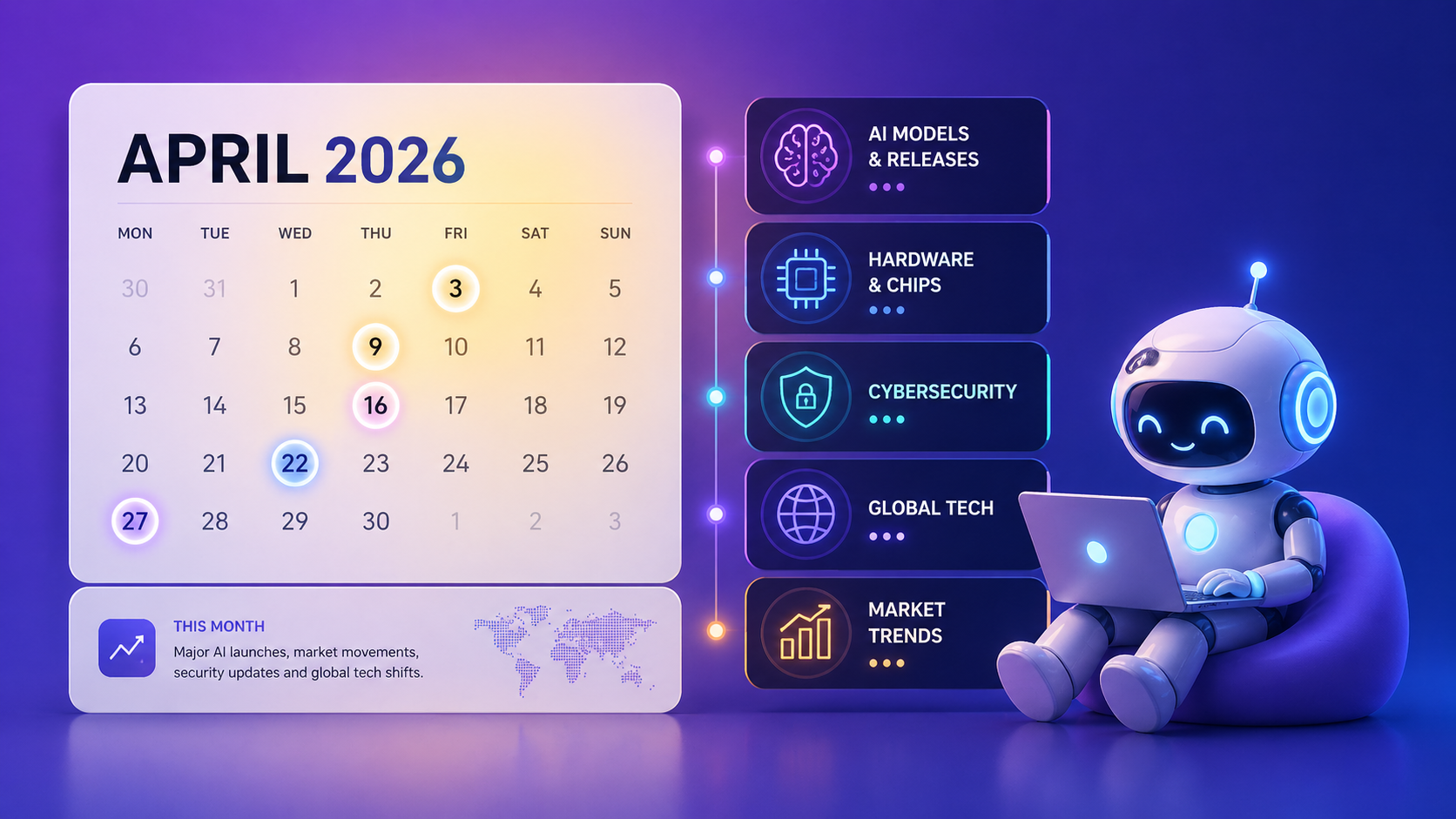
April 2026 has been packed with major developments across artificial intelligence, hardware, and global tech policy. From aggressive AI expansion by tech giants to surprising movements in the chip market, the industry is moving faster than ever. Here’s a breakdown of the most important updates shaping the tech world right now.
Artificial Intelligence and Tech Giants
The AI race continues to intensify, with both Western and Chinese companies pushing hard on innovation and scale. DeepSeek has introduced its latest V4 models, focusing heavily on cost efficiency and performance. This move is already triggering pricing pressure across the AI market, especially for companies offering large scale model access.
At the same time, geopolitical tensions are starting to influence AI growth. China has reportedly blocked Meta from acquiring a local AI startup, signaling tighter control over domestic innovation and foreign involvement.
Google is also making bold claims about its internal AI adoption. According to Sundar Pichai, a significant portion of new code being written at Google is now generated with the help of AI. The company is further expanding its AI infrastructure by planning a dedicated campus in South Korea.
On another front, Elon Musk has introduced XChat, a new messaging platform positioned around privacy and integrated AI capabilities. This comes at a time when concerns around existing messaging platforms are increasing.
Meanwhile, OpenAI is facing scrutiny over how its systems are used in sensitive situations, including discussions around law enforcement communication and evolving relationships with defense related projects.
Hardware, Chips, and Market Momentum
Behind the scenes, the hardware layer of AI is seeing just as much action. Intel surprised the market with a major stock surge, marking one of its strongest performances in decades. This reflects growing optimism around its turnaround strategy and its role in the AI supply chain.
Nvidia continues to dominate, reaching new milestones in market valuation as demand for AI chips remains extremely high. There are also early signals that Nvidia could expand further into personal computing, which may reshape the PC market in the coming years.
However, not everything is moving smoothly. Global supply chains are under pressure due to geopolitical conflicts, especially affecting components like printed circuit boards. This is likely to increase costs for manufacturers and slow down production in some areas.
In parallel, reports suggest that OpenAI is exploring partnerships to develop AI focused consumer devices, including a possible smartphone designed around AI first experiences.
Cybersecurity and Regulation
As AI becomes more powerful, concerns around security and misuse are growing. Models like Anthropic’s advanced systems are already under review by regulatory bodies due to their potential risks in cybersecurity contexts.
At the same time, cyber threats are evolving. Reports indicate that attackers are using popular communication platforms in more sophisticated ways to deceive users, highlighting the need for stronger digital awareness and protection.
Governments are also stepping in more actively. Authorities in the United States are investigating cases related to AI technology transfers, while other countries are tightening policies around data usage and AI development.
Other Notable Developments
Beyond AI and hardware, several other stories are shaping the tech landscape. Meta is reportedly preparing for large scale layoffs, with internal discussions pointing toward restructuring efforts as the company shifts its priorities.
SpaceX has also been in the spotlight, with reports raising questions about the use of company resources in certain scenarios.
In the consumer space, innovation continues with AI powered wearables. Google is working alongside luxury brands to bring smart glasses with integrated AI features to market, hinting at the next wave of personal technology.
Final Thoughts
April 2026 shows how deeply connected the tech world has become. AI advancements, hardware growth, global politics, and security concerns are all influencing each other in real time.
The industry is no longer moving in isolated directions. Everything is linked, and the pace is only increasing. The coming months will likely bring even bigger shifts as companies continue to compete, collaborate, and push the boundaries of what technology can do.