AI Updates April 2026: ChatGPT, Gemini, Meta and More
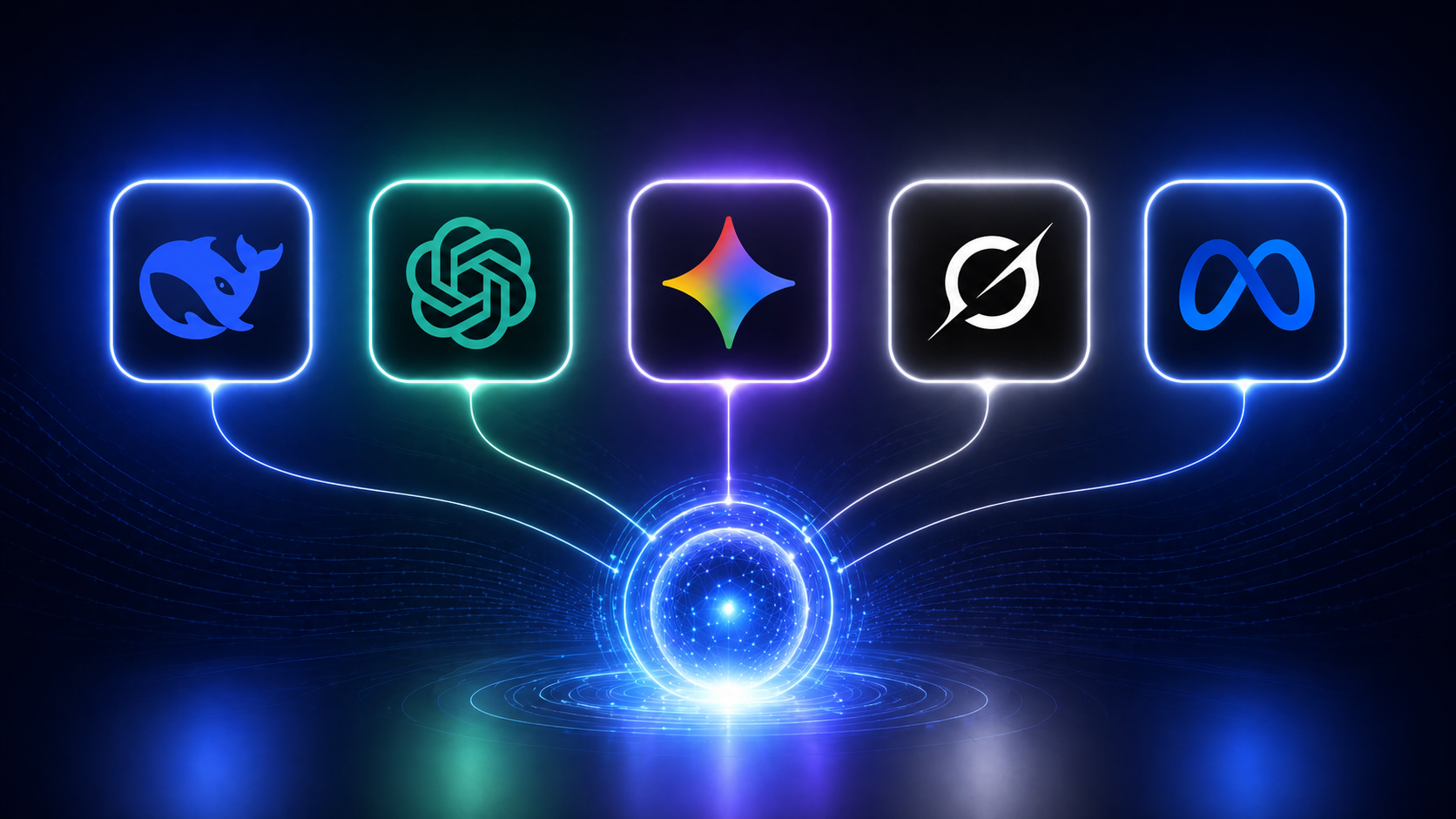
April 2026 has brought a wave of major updates across the AI space, with nearly every leading company pushing something new. OpenAI rolled out GPT 5.5 along with upgrades like ChatGPT Images 2.0, while DeepSeek introduced its V4 Pro model focused on efficient performance and strong reasoning. Google continued its momentum with Gemini 3.1 and faster Flash variants, supported by new TPU infrastructure built for agent driven workloads.
At the same time, Anthropic released Claude Opus 4.7 and expanded into managed agents, while Meta introduced Muse Spark to bring AI directly into platforms like Instagram and WhatsApp. Beyond the usual players, Sony AI continued advancing real world applications across creativity and robotics, showing how AI is spreading beyond software into physical and consumer experiences.
OpenAI: ChatGPT and GPT 5.5 Push Toward Agentic AI
OpenAI has taken a major step forward with the release of GPT 5.5. This model is clearly designed for more serious use cases, especially in areas like coding, scientific research, and computer based tasks. The focus is no longer just conversation. It is about execution.
What stands out is how much attention has been given to agentic capabilities. ChatGPT is slowly becoming something that can handle multi step tasks instead of just giving answers. This makes it far more useful for developers, businesses, and anyone working on complex workflows.
Another important update is ChatGPT Images 2.0. The improvements here are noticeable, especially when it comes to generating more complex and detailed visuals. It feels less like a basic image generator and more like a system that understands context better.
Behind all of this is heavy investment in infrastructure. Running on advanced NVIDIA systems, OpenAI is clearly preparing for large scale, high performance AI usage.
DeepSeek: DeepSeek V4 Pro and the Efficiency Race
DeepSeek is quietly becoming one of the most interesting players in the AI space, especially because of its focus on efficiency and cost effective performance. With the release of DeepSeek V4 Pro, the company is showing that high level AI capabilities do not always have to come with massive infrastructure costs. The model is designed to handle strong reasoning, coding, and mathematical tasks while staying relatively lightweight compared to competitors.
What makes DeepSeek stand out is its approach to optimization. Instead of only scaling up like other companies, it is focusing on smarter architectures that deliver solid performance with fewer resources. This makes it particularly attractive for developers and companies that want powerful AI without the heavy expense of large scale deployment.
Another important aspect is accessibility. DeepSeek models are often more open and easier to experiment with, which is helping them gain attention among the developer community. While it may not yet match the ecosystem strength of larger players, it is clearly pushing the industry toward more efficient and practical AI solutions.
Anthropic: Focus on Reliability and Enterprise Use
Anthropic is taking a slightly different path compared to others by focusing heavily on trust, safety, and long term reliability. With the release of Claude Opus 4.7, the goal is not just to make the model more powerful, but to make it more dependable in real world use. It shows clear improvements in areas like coding, reasoning, and handling complex tasks over longer interactions, while also trying to reduce incorrect or misleading outputs. This matters a lot for businesses, where even small mistakes can lead to bigger problems. At the same time, features like Claude Managed Agents are pushing the platform toward more practical usage, allowing developers to deploy AI systems that can actually perform tasks in the cloud instead of just assisting in conversations.
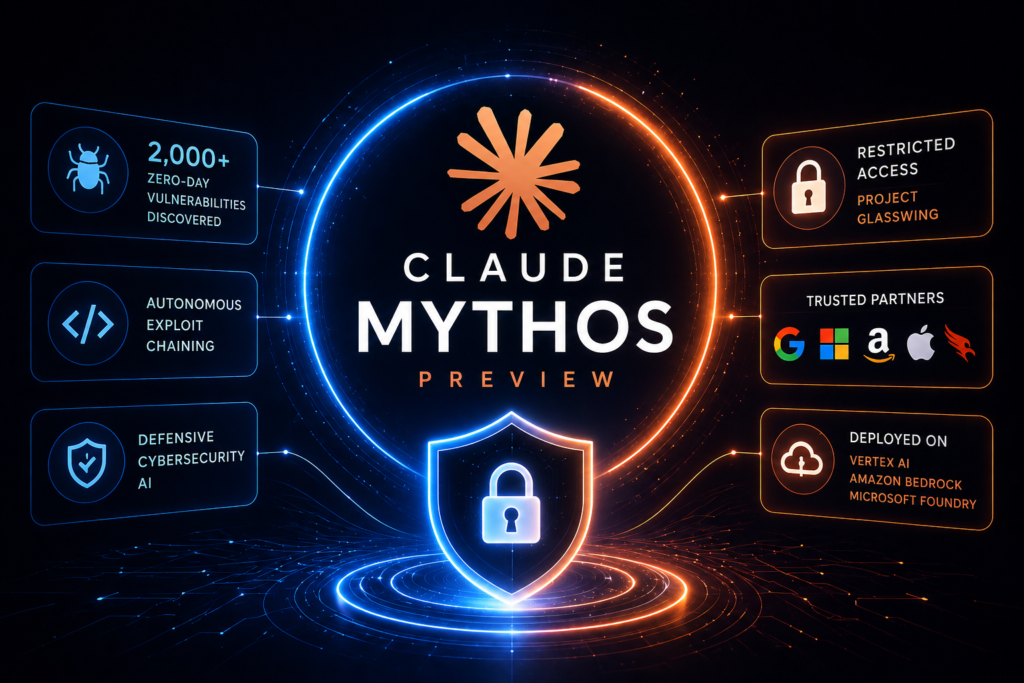
At a deeper level, Anthropic is also exploring more advanced and sensitive areas, especially in cybersecurity. Its experimental model, Claude Mythos, shows how far AI capabilities can go, with the ability to detect and even chain together vulnerabilities across systems. While this opens up powerful possibilities for defending digital systems, it also raises serious concerns about misuse, which is why access to it is highly restricted. This balance between capability and control reflects Anthropic’s overall direction. Instead of chasing raw power alone, the company is trying to build AI that can be trusted in critical environments, where safety, stability, and oversight matter just as much as performance.
Google: Gemini 3.1 and the Push for Speed and Integration
Google continues to strengthen its position by improving both performance and ecosystem integration. With Gemini 3.1, the focus seems to be on speed and usability.
The introduction of faster Flash models makes everyday interactions smoother and more responsive. At the same time, improvements in text to speech show that Google is working toward more natural and accessible AI experiences.
What makes Gemini different is how deeply it fits into the Google ecosystem. Whether it is Search, Workspace, or Android, Gemini feels like an extension of tools people already use. This makes it especially useful for productivity and research tasks.
Google is also investing heavily in hardware. The announcement of TPU 8i and TPU 8t shows that the company is building the infrastructure needed to support this new wave of AI, especially systems that rely on continuous task execution.
Sony AI: Moving Toward Real World Applications
Sony AI is taking a different direction compared to traditional AI companies. Instead of focusing only on chat models or general purpose assistants, Sony is working on applying AI in real world creative and industrial environments.
In April 2026, Sony AI continued to expand its work in areas like imaging, content creation, and robotics. Its models are being designed to work closely with Sony’s existing products, including cameras, music production tools, and gaming systems. This gives it a unique advantage, as it can bring AI directly into hardware that millions of people already use.
The focus here is not just intelligence but experience. Sony AI is trying to enhance creativity, whether it is helping photographers capture better images, assisting in music composition, or improving interactive experiences in gaming.
While it may not be competing directly with platforms like ChatGPT or Gemini in everyday conversation, Sony AI represents an important part of the ecosystem. It shows how AI is expanding beyond software and becoming deeply integrated into creative industries and physical products.
Meta: Muse Spark Brings AI to Billions
Meta is taking a different approach by focusing on scale and accessibility. With the introduction of Muse Spark, the company is bringing AI directly into platforms like Facebook, Instagram, and WhatsApp.
This model is designed to handle multiple types of input, including text and visuals, while also supporting more advanced reasoning. One interesting aspect is its ability to manage parallel agent workflows, which hints at a future where multiple AI systems work together behind the scenes.
The biggest advantage here is reach. Instead of expecting users to come to AI, Meta is placing AI where users already are. This could change how people interact with AI on a daily basis.
At the same time, Meta continues to build on its Llama 4 ecosystem, showing that it is serious about both open models and large scale deployment.