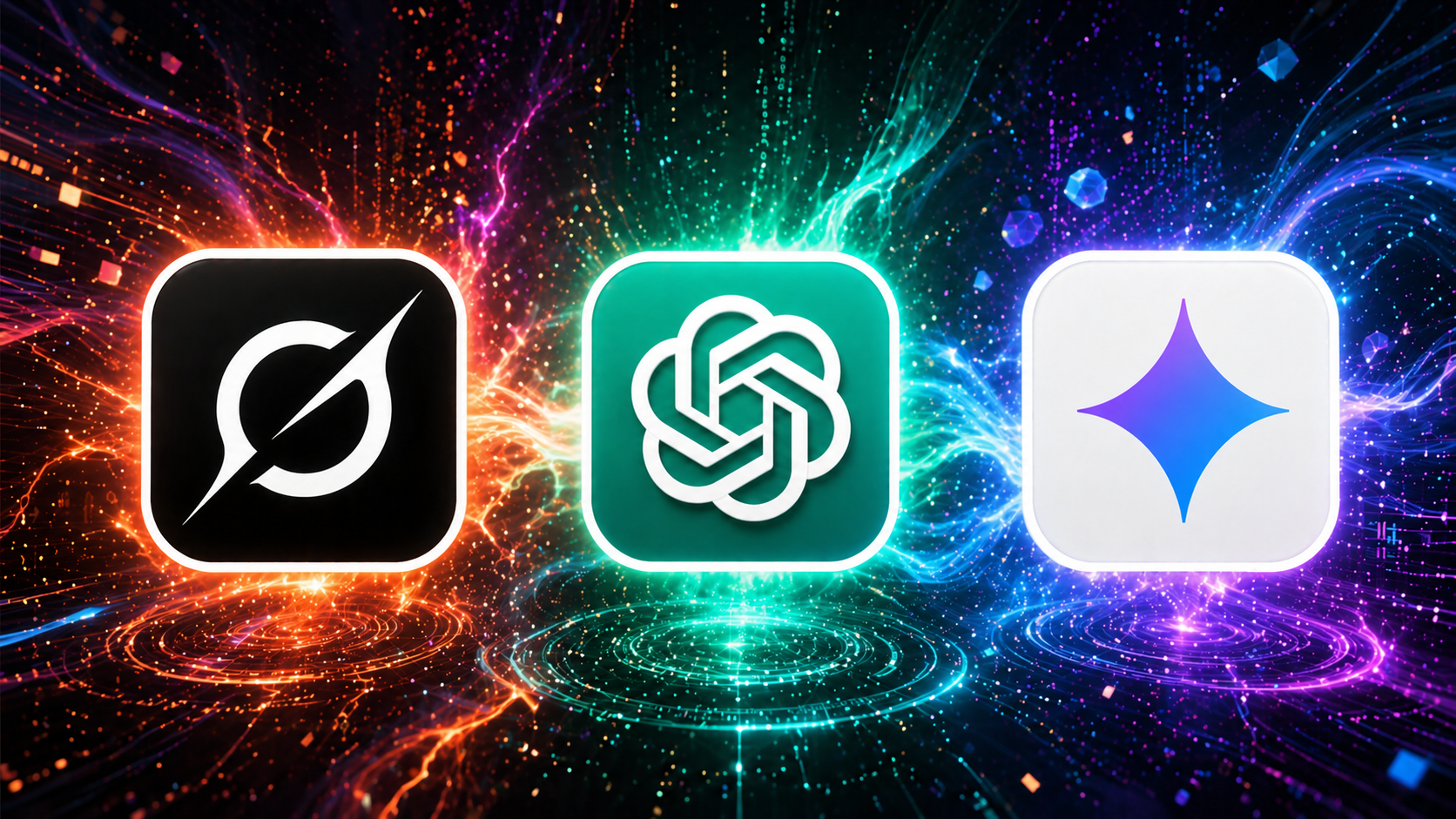
Grok vs ChatGPT vs Gemini: The AI Race Defining 2026
What is ChatGPT?
ChatGPT, developed by OpenAI, is still seen as a standard when it comes to structured thinking and practical use of AI in real work. With the newer GPT 5 models behind it, it has moved far beyond being just a chatbot. Today, it can handle complex tasks across writing, coding, business logic, and even automation in a way that feels much more reliable and usable.
One of the things that makes ChatGPT stand out is how well it can follow long conversations. It does not lose track easily, which means users can build on ideas instead of starting over again and again. This is especially valuable for developers, professionals, and creators who need consistency and depth while working on something over time.
Another important feature is memory. ChatGPT can remember preferences and past interactions, which allows it to respond in a way that feels more personal and relevant. Because of this, it starts to feel less like a tool you use once and more like an assistant that grows with you.
A big part of its strength comes from how well it can structure its responses. Whether it is writing a detailed article, generating code, designing systems, or breaking down a process step by step, it delivers output that is clear and organized. At the same time, OpenAI continues to invest heavily in computing power, which shows a clear focus on keeping performance strong and scaling even further in the future.
ChatGPT Capability Overview
| Category | Details |
|---|---|
| Model Family | GPT-5 series |
| Core Strength | Execution, system design, structured outputs |
| Reasoning Ability | Strong, optimized for clarity and problem solving |
| Coding Capability | Advanced, full-stack development and debugging |
| Context Window | Large, supports multi-step workflows |
| Multimodal | Strong across text, code, and structured outputs |
| Tooling | Deep integration with tools, APIs, and automation workflows |
| Ideal Use Case | Building products, automating tasks, structured content creation |
What is Gemini?
Gemini, developed by Google, is built with a very different approach compared to most standalone AI tools. Instead of trying to replace what people already use, it fits directly into the digital ecosystem many are already familiar with. Its real strength comes from how naturally it connects with products like Google Search, Workspace, and Android.
Because of this, using Gemini often feels like an extension of everyday tools rather than a separate platform. It can help draft emails inside Gmail, work with documents in Google Docs, or support research through Search without forcing users to switch contexts. The idea is simple but powerful: stay where you are and let AI assist you within that space.
Gemini also stands out for its multimodal capabilities. It can understand and work with text, images, audio, and more complex types of data, which makes it useful for tasks that go beyond simple conversations. Features like Deep Research show Google’s intention to position it as a serious research assistant, capable of handling large amounts of information and turning it into something meaningful.
At the same time, there are some concerns that cannot be ignored. Google has made it clear that user interactions may be reviewed by human evaluators and stored for longer periods. Because of this, many users are becoming more careful about what kind of information they share, especially when it comes to anything personal or sensitive.
Gemini Capability Overview
| Category | Details |
|---|---|
| Model Family | Gemini (latest multimodal models) |
| Core Strength | Ecosystem integration and research capabilities |
| Reasoning Ability | Strong, with focus on information synthesis |
| Coding Capability | Good, integrated within Google tools |
| Context Window | Large, optimized for document and research workflows |
| Multimodal | Advanced (text, image, audio, data) |
| Tooling | Deep integration with Google Workspace, Search, Android |
| Ideal Use Case | Research, productivity, and ecosystem-driven workflows |
What is Grok?
Grok, developed by xAI, takes a noticeably different path compared to other AI systems. Instead of focusing only on structured reasoning or productivity, it leans heavily into real time awareness and social understanding. What makes it stand out is its connection with X, previously known as Twitter, which allows it to tap into live public conversations as they happen.
Because of this, Grok feels more current and responsive. It can pick up on trends, breaking topics, and shifts in public opinion much faster than most other models. This makes it especially useful for people who care about what is happening right now, whether it is news, online discussions, or social sentiment that changes quickly.
With the release of Grok 4.3, the system has made noticeable progress in performance. Some reports suggest it has even outperformed competitors in certain text based benchmarks. On top of that, xAI introduced Grok Voice Think Fast 1.0, which focuses on fast and smooth voice interactions, making real time conversations feel more natural.
At the same time, Grok has not been free from criticism. There have been instances where it produced responses that were seen as inappropriate or not well aligned, especially in sensitive situations. These issues have raised questions about how reliable it is in comparison to more controlled and carefully tuned systems.
Grok Capability Overview
| Category | Details |
|---|---|
| Model Family | Grok 4.3 |
| Core Strength | Real-time intelligence and social data analysis |
| Reasoning Ability | Improving rapidly, strong in text benchmarks |
| Coding Capability | Moderate, improving with updates |
| Context Window | Competitive, focused on dynamic interactions |
| Multimodal | Expanding, with voice-focused advancements |
| Tooling | Integrated with X (Twitter) for real-time data |
| Ideal Use Case | Real-time insights, trends, social intelligence |
Key Trends Shaping the AI Competition
The competition between ChatGPT, Gemini, and Grok is not only about who has more features. It actually shows a bigger shift in how artificial intelligence is evolving and how people are starting to use it in their daily lives.
One of the biggest concerns across all three platforms is data privacy. Companies have made it clear that conversations may be reviewed or used to improve their systems. Because of this, users are becoming more aware and careful, especially when it comes to sharing personal or sensitive information.
Another important issue is reliability, especially in areas where accuracy really matters. Studies have shown that these models can sometimes give incorrect or misleading answers, particularly in topics like medical or nutritional advice. This is a reminder that AI should be treated as a helpful assistant, not something to rely on as a final decision maker.
At the same time, the market itself is changing. Grok has been growing quickly, especially in the United States, and is starting to challenge the strong position held by ChatGPT and Gemini. This shift shows that users are not just sticking to one platform anymore. Instead, they are choosing tools based on what each one does best, whether that is real time information, structured work, or deeper research capabilities.
Final Comparison: ChatGPT vs Gemini vs Grok
| Feature | ChatGPT | Gemini | Grok |
|---|---|---|---|
| Core Focus | Structured workflows & reasoning | Ecosystem integration & research | Real-time social intelligence |
| Strength | Accuracy, depth, execution | Productivity & multimodal research | Speed, live data, trend awareness |
| Personalization | Strong (memory features) | Moderate | Limited |
| Real-time Data | Limited | Moderate (via Google Search) | Strong (via X integration) |
| Multimodal | Strong | Very strong | Growing |
| Reliability | High (structured tasks) | High (research tasks) | Variable |
| Best For | Developers, creators, workflows | Professionals, researchers | Trend analysis, real-time updates |
Conclusion
The AI space in 2026 is no longer controlled by just one dominant player. Instead, it has turned into a fast moving ecosystem where each platform brings something different to the table and excels in its own way.
ChatGPT stands out for how well it handles structured thinking and execution. It works like a long term assistant that can help you build, plan, and carry ideas forward. Gemini, on the other hand, feels deeply connected to everyday tools and shines when it comes to research and productivity. Grok adds a different angle altogether with its focus on real time awareness and understanding what is happening across social platforms.
So there is no single answer to which AI is the best. It really depends on what you need. If you are building something complex or working through detailed ideas, ChatGPT is often the better fit. If your focus is research or getting work done smoothly within familiar tools, Gemini makes more sense. And if you want to stay updated with fast moving trends and live conversations, Grok has a clear advantage.
As this competition keeps growing, one thing becomes obvious. AI is no longer just about giving answers. It is about how well it fits into the way people work and how effectively it helps them make better decisions in real time.