Suno vs. YouTube: The Data Scraping Hack and the Looming Legal Crisis for Generative AI Music
Introduction: The AI Music Revolution and the Training Data Dilemma
Imagine typing “1980s synth-pop track about a lonely astronaut” and getting a radio-ready song in seconds. That is the mind-blowing reality of generative AI music today, spearheaded by viral platforms like Suno and Udio.
But behind this push-button magic lies a massive, brewing storm over intellectual property. To create these hyper-realistic tracks, these algorithms must ingest millions of copyrighted songs as AI music generator training data.
This has triggered a high-stakes clash between tech innovators and the creative industry:
- The Tech Defense: Training AI on publicly available audio is transformative “fair use.”
- The Artist Backlash: Scraping copyrighted catalogs without consent or compensation is outright theft.
- The Platform Dilemma: Rumors of scraping YouTube’s vast library have pushed tech giants to defensive postures.
As major record labels launch massive lawsuits, the industry is hurtling toward a legal reckoning that could redefine copyright law forever.
The Core of the Crisis: The RIAA Lawsuits Against Suno and Udio
The brewing storm officially made landfall in June 2024. The Recording Industry Association of America (RIAA)—representing giants like Sony, Universal, and Warner—filed blockbuster federal lawsuits against both startups. This landmark Suno Udio lawsuit represents a watershed moment for copyright infringement generative AI disputes.
The core allegation is straightforward: Suno and Udio allegedly copied decades of proprietary sound recordings without permission or licensing. According to the RIAA lawsuit Suno complaint, these platforms didn’t just learn from music—they duplicated it at an industrial scale to build competing commercial products.
To prove this, the major labels presented several smoking guns in their filings:
- Audio Artifacts: Generated tracks occasionally spit out distorted, glitchy versions of trademark producer tags and artist signatures.
- Stylistic Clones: Prompting the AI with specific eras yielded near-identical vocal timbres and instrumental hooks of classic hits.
- Massive Scale: The plaintiffs argue that achieving this level of musical fidelity is mathematically impossible without scraping their entire copyrighted catalogs.
The Data Scraping Hack: How AI Models Ingest Music from Platforms Like YouTube
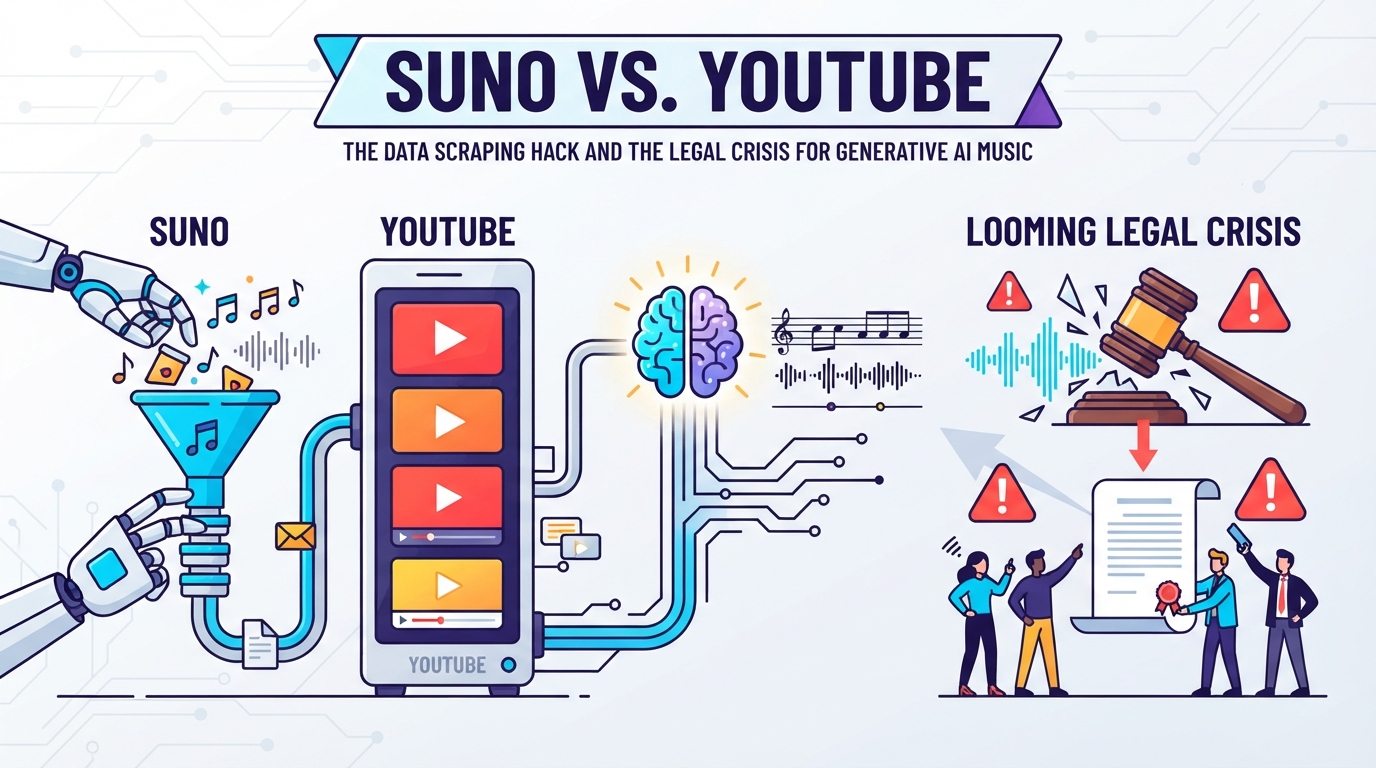
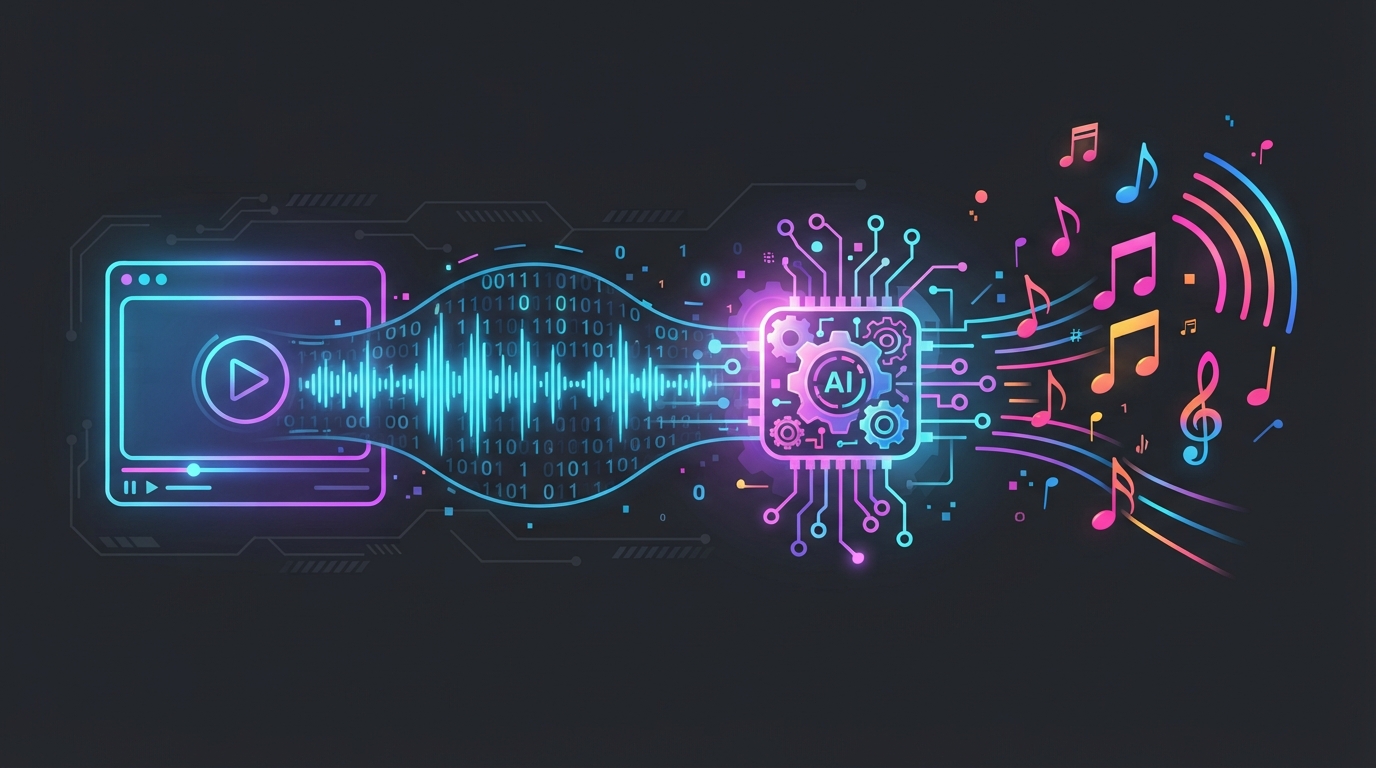
How do you feed a hungry algorithm billions of parameters? You don’t ask for permission; you deploy web scrapers. To build robust AI music generator training data, developers rely on automated bots that crawl the web, bypass basic security protocols, and download audio files at lightning speed.
YouTube is the ultimate goldmine for this practice. Through data scraping YouTube music, AI companies can bypass expensive licensing fees by treating the public-facing video platform as a free, infinite library.
Here is how this controversial pipeline typically works:
- Ingestion: Automated scripts rip audio tracks directly from YouTube videos.
- Preprocessing: Vocals and instruments are separated, and files are sliced into digestible chunks.
- Tokenization: The audio is converted into mathematical tokens for neural network training.
While YouTube’s Terms of Service explicitly forbid automated scraping, AI firms have historically operated under the “forgiveness, not permission” model. This massive harvesting of unlicensed intellectual property has created a ticking legal timebomb.
Fair Use or Fair Game? The Legal Defenses of AI Startups
When the Recording Industry Association of America (RIAA) hauled Suno and Udio to court, it set up the ultimate legal showdown over fair use AI music. The startups argue that training an AI is no different than a human musician listening to songs to learn the craft. They claim their systems analyze data to create entirely new, transformative works rather than copying the original files.
But the major record labels see things very differently. Here is how the two sides stack up:
- The AI Defense: Training is “fair use” because the model learns underlying musical concepts, not the specific tracks.
- The Labels’ Accusation: This is massive, willful copyright infringement generative AI designed to build competing commercial products using stolen assets.
The stakes couldn’t be higher. The labels are demanding maximum statutory damages of $150,000 per infringed work. With millions of songs potentially scraped, a defeat in court would mean instant bankruptcy for these AI music pioneers.
Conclusion: The Future of Generative AI Music and Licensing Models
The outcome of these legal battles will reshape the entire landscape of generative AI music. If courts reject the “fair use” defense, the era of scraping the web for free AI music generator training data will officially be over.
Instead, we are looking at a massive shift toward a fully licensed ecosystem, similar to how Spotify transformed music streaming. Moving forward, the industry will likely adopt three key pillars:
- Direct Licensing Deals: AI developers paying record labels upfront royalties to train on their proprietary catalogs.
- Revenue-Sharing Models: Artists receiving a percentage of revenue whenever their style or likeness is used to generate new tracks.
- Opt-In Registries: Giving independent creators the power to choose whether their music is included in training datasets.
Ultimately, this friction isn’t about stopping technology—it’s about establishing a fair price for the raw materials. The future of AI music won’t be built on unauthorized scraping, but on mutual, monetized consent.