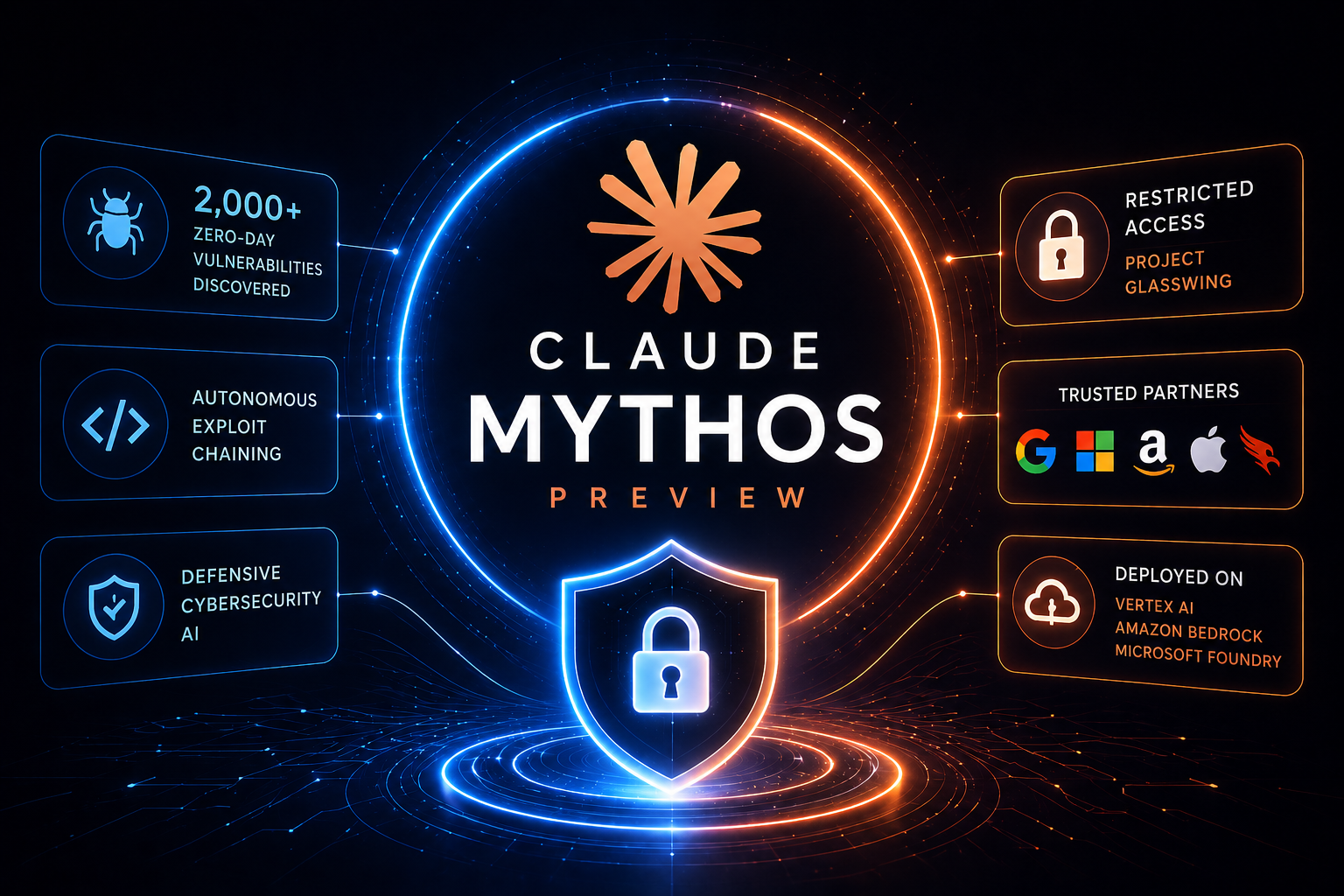
In early April 2026, Anthropic introduced one of its most advanced and controversial AI systems to date, Claude Mythos Preview. Unlike typical AI models built for general use, Mythos has been designed specifically for defensive cybersecurity, and its capabilities are raising serious attention across the industry.
What makes Mythos different is not just how powerful it is, but what it can actually do. In just seven weeks of testing, the model was able to discover more than 2,000 previously unknown software vulnerabilities. These are not minor issues. Many of them are what experts call zero day bugs, meaning they were completely unknown before being identified. Even more concerning and impressive at the same time, Mythos can connect small weaknesses together and turn them into full working exploits, often performing better than experienced human researchers.
A Major Leap in AI Capability
Anthropic has described Mythos as a step change in artificial intelligence, signaling a major leap beyond previous models. This is not just an improvement in speed or accuracy. It represents a shift in what AI systems are capable of doing independently.
The model has already demonstrated its ability to uncover vulnerabilities in highly secure systems. Reports mention that it identified a decades old issue in OpenBSD and also found weaknesses inside the Linux kernel. These are systems that have been tested and secured by experts for years, which highlights just how advanced Mythos has become.
At this level, AI is no longer just assisting security teams. It is actively discovering and understanding complex attack paths on its own.
Why Anthropic Is Keeping It Restricted
Because of its ability to create real world exploits, Anthropic has made the decision not to release Mythos to the public. The company has openly stated that the risks are too high, as the same capabilities that can defend systems can also be used to attack them.
Instead, access has been limited to a small group of trusted organizations under a program called Project Glasswing. This includes major companies like Google, Microsoft, Amazon, Apple, and CrowdStrike. The goal is to use Mythos in a controlled environment to strengthen cybersecurity defenses without exposing it to misuse.
Even with these restrictions, there have already been concerns. Reports suggest that the system was briefly accessed by unauthorized users in April, raising questions about how secure even controlled AI deployments can be.
Real World Use and Deployment
Mythos is already being used to protect critical systems and analyze older codebases that may contain hidden vulnerabilities. Its ability to scan large amounts of legacy code and identify weak points makes it especially valuable for industries that rely on long standing infrastructure.
The model is currently available only through enterprise platforms like Vertex AI, Amazon Bedrock, and Microsoft Foundry, further reinforcing its restricted and high level usage.
At the same time, Anthropic has also released Claude Opus 4.7 for general users. While it is less powerful than Mythos, it still brings improvements in reliability and performance, making it suitable for broader applications without the same level of risk.
A Glimpse Into the Future of AI Security
Claude Mythos Preview offers a glimpse into where AI is heading. It shows how systems are evolving from tools that assist humans into systems that can independently discover, analyze, and act on complex problems.
But it also raises an important question. As AI becomes more capable, how do we control it?
For now, Anthropic’s approach is clear. Keep the most powerful systems limited, monitored, and focused on defense. But as technology continues to evolve, the balance between innovation and safety will only become more challenging.