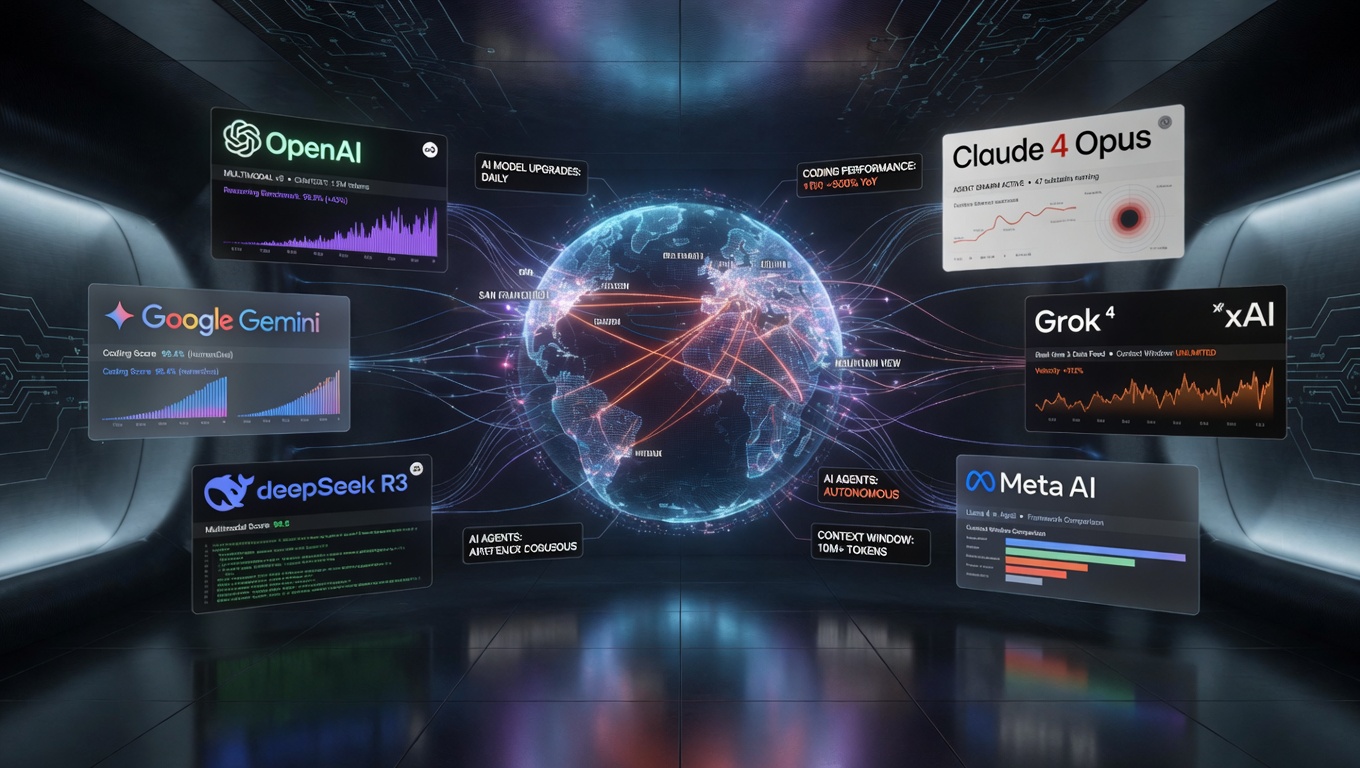
The artificial intelligence industry is moving faster than ever before. In 2026, major AI companies are releasing new models, updates, and advanced features at a pace that is beginning to overwhelm even dedicated AI users. What started as competition between a few chatbot platforms has now turned into a full-scale global AI race involving OpenAI, Google, Anthropic, xAI, Meta, DeepSeek, Mistral, and several rapidly growing startups.
Almost every month, a new model claims better reasoning, faster responses, larger context windows, stronger coding abilities, or more advanced multimodal features. As companies compete aggressively for dominance, the AI landscape is changing at an unprecedented speed.
OpenAI Continues Expanding the GPT Ecosystem
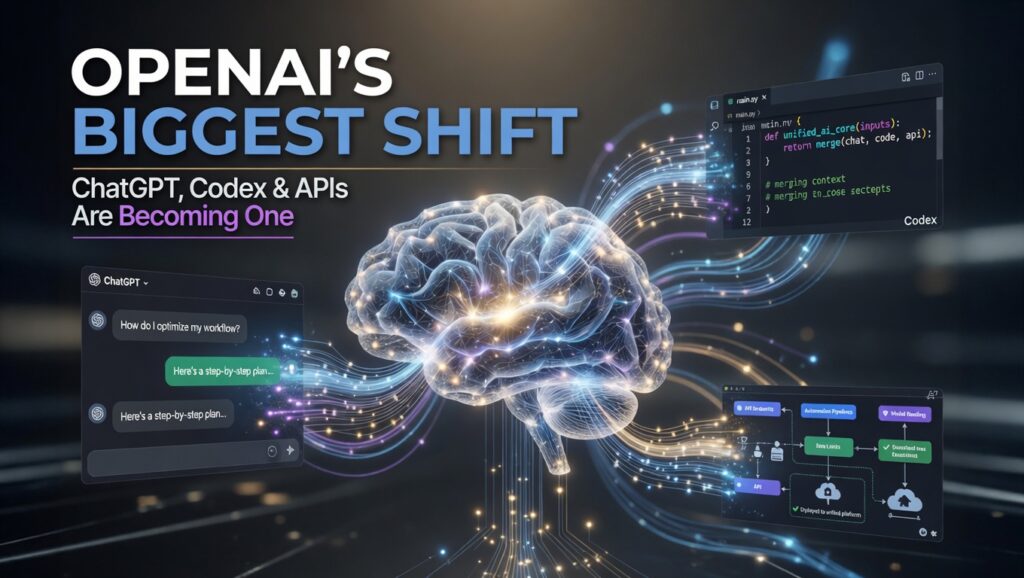
OpenAI remains one of the biggest players in the AI industry. The company continues expanding the GPT ecosystem with stronger reasoning models, memory improvements, coding capabilities, multimodal AI systems, and advanced AI agents.
ChatGPT has evolved far beyond a simple chatbot. It is now becoming a complete AI workspace capable of handling writing, coding, research, image understanding, voice interaction, and automation tasks. OpenAI’s rapid rollout strategy is keeping constant pressure on competitors across the industry.
Google Gemini Is Pushing AI Integration Everywhere
Google Gemini has become one of the most aggressive AI platforms in terms of ecosystem expansion. Google is deeply integrating Gemini into Search, Android, Workspace, Chrome, and cloud services, turning AI into a core part of its entire product ecosystem.
One of Gemini’s biggest focuses is large context windows and multimodal understanding. Google is heavily pushing AI systems capable of processing huge amounts of information simultaneously, making Gemini increasingly powerful for productivity and enterprise workflows.
Claude Models Are Gaining Strong Enterprise Attention
Anthropic and its Claude models are rapidly becoming popular among users focused on long reasoning tasks, writing quality, coding, and professional workflows. Claude has developed a strong reputation for handling large documents, complex conversations, and structured outputs effectively.
Anthropic is also aggressively expanding into enterprise AI services, positioning Claude as a serious competitor for businesses looking to integrate advanced AI systems into daily operations.
xAI and Grok Are Growing Rapidly
xAI and Grok have quickly become major talking points in the AI space. Grok’s rapid feature rollouts, real-time internet integration, image generation tools, and growing creator community have helped the platform gain significant attention in a short time.
The company’s aggressive development speed reflects how competitive the AI industry has become. Platforms are no longer waiting years between major updates — many are now shipping new capabilities continuously.
DeepSeek Shocked the AI Industry
DeepSeek emerged as one of the most surprising AI success stories in the industry. The platform gained massive attention after releasing highly capable models that competed strongly with leading Western AI systems while attracting developers and open-source communities worldwide.
DeepSeek’s rapid growth demonstrated that the AI race is no longer limited to a small group of Silicon Valley companies. Global competition in AI development is now accelerating much faster.
Meta and Open-Source AI Are Expanding Fast
Meta AI continues investing heavily in open-source AI through its Llama ecosystem. Open-source AI models are becoming increasingly powerful, giving developers and businesses more alternatives outside closed commercial platforms.
The rise of open-source AI is creating another major layer of competition. Companies are now competing not only on performance, but also on accessibility, customization, ecosystem growth, and developer adoption.
Why The AI Race Is Accelerating So Quickly
Several major factors are driving the extreme pace of AI model releases in 2026.
The first is massive global investment. Tech companies are spending billions of dollars on GPUs, AI infrastructure, data centers, and cloud computing systems. The second is consumer demand, as millions of users now rely on AI daily for work, creativity, coding, research, education, and entertainment.
At the same time, businesses worldwide are racing to integrate AI into products and services before competitors gain an advantage. This pressure is forcing companies to release updates faster and innovate more aggressively than ever before.
The AI Industry Is Changing Almost Weekly
One of the biggest differences in 2026 is the speed of change itself. AI platforms are no longer evolving slowly. New models, new features, and new capabilities are appearing almost every week.
Users are constantly comparing:
- reasoning quality,
- coding performance,
- multimodal abilities,
- speed,
- memory,
- AI agents,
- and ecosystem integration.
This has transformed the AI industry into one of the fastest-moving sectors in modern technology.
Final Thoughts
The AI model release race in 2026 is becoming one of the most intense technology competitions ever seen. OpenAI, Google, Anthropic, xAI, Meta, DeepSeek, and many other companies are all pushing aggressively to build faster, smarter, and more capable AI systems.
As the competition continues accelerating, users can expect even more rapid updates, larger AI ecosystems, smarter assistants, and increasingly powerful tools throughout the rest of the year.
The pace of AI development is no longer slowing down — it is accelerating faster than ever.