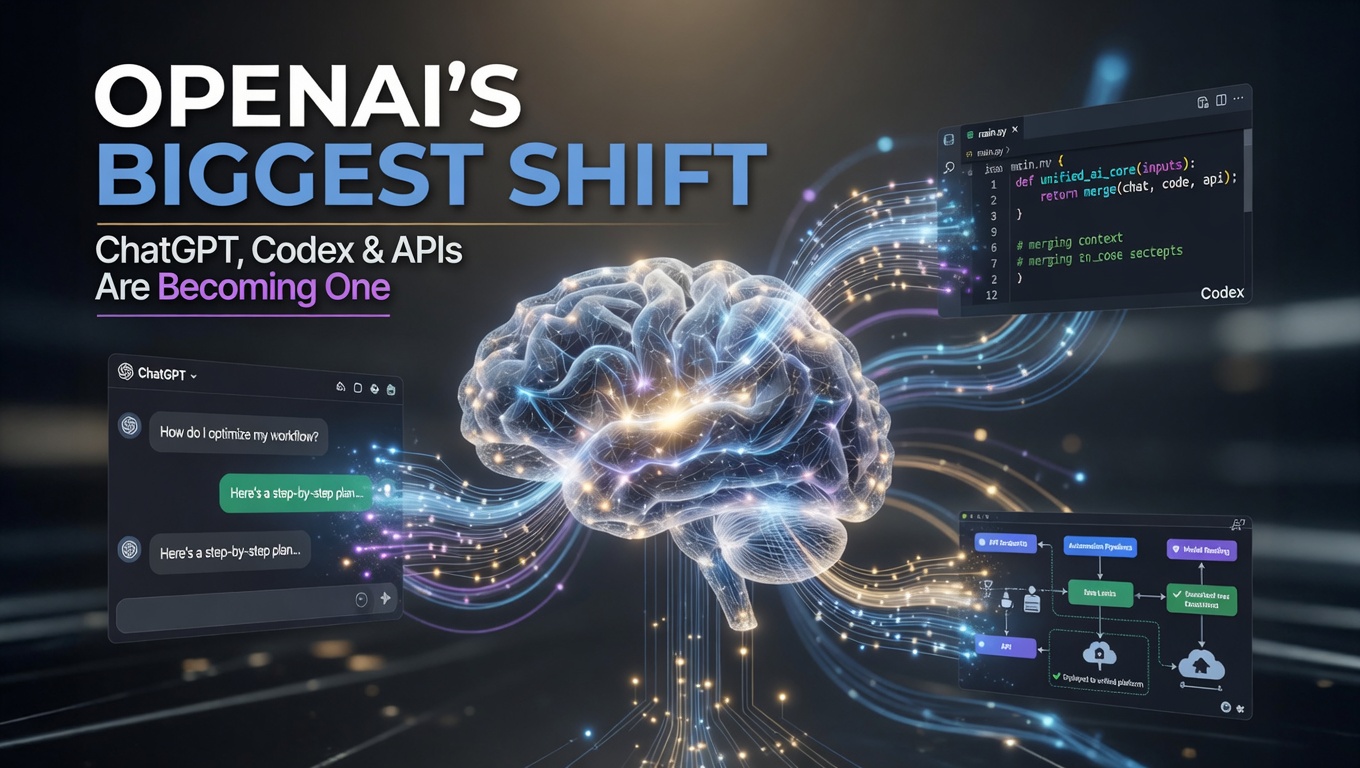
OpenAI has officially merged its ChatGPT, Codex and developer API teams into one unified product division, marking one of the biggest internal changes in the company’s history. The decision is already creating major discussion across the AI industry, with many experts calling it a sign that OpenAI is preparing for a much larger future beyond chatbots.
The restructuring comes at a time when the global artificial intelligence race is becoming more intense than ever, with companies competing to build smarter AI systems, advanced coding tools and autonomous AI agents.
OpenAI Is Combining Its Biggest Products
Until now, ChatGPT, Codex and OpenAI’s developer API systems operated more independently. With this new restructuring, the company wants all of these products to work under one connected vision instead of functioning as separate divisions.
Reports suggest OpenAI believes the future of AI will rely on deeply connected systems where chat, coding, automation and business tools all work together inside one ecosystem.
The move also gives OpenAI cofounder Greg Brockman greater control over product direction as the company focuses on faster execution and long term AI expansion.
ChatGPT May Become More Than Just a Chatbot
One of the biggest reasons this update matters is because it shows how OpenAI is evolving ChatGPT itself.
Industry analysts believe OpenAI wants ChatGPT to become a central AI platform that can eventually:
- write and manage code
- automate tasks
- interact with software
- assist businesses
- power AI agents
- connect directly with developer tools
Instead of building separate AI products for every use case, OpenAI appears to be creating one unified AI experience.
This fits into the larger trend happening across Silicon Valley where companies are racing to build AI assistants capable of performing actions rather than simply answering questions.
Competition in the AI Industry Is Growing Fast
The timing of the restructuring is also important.
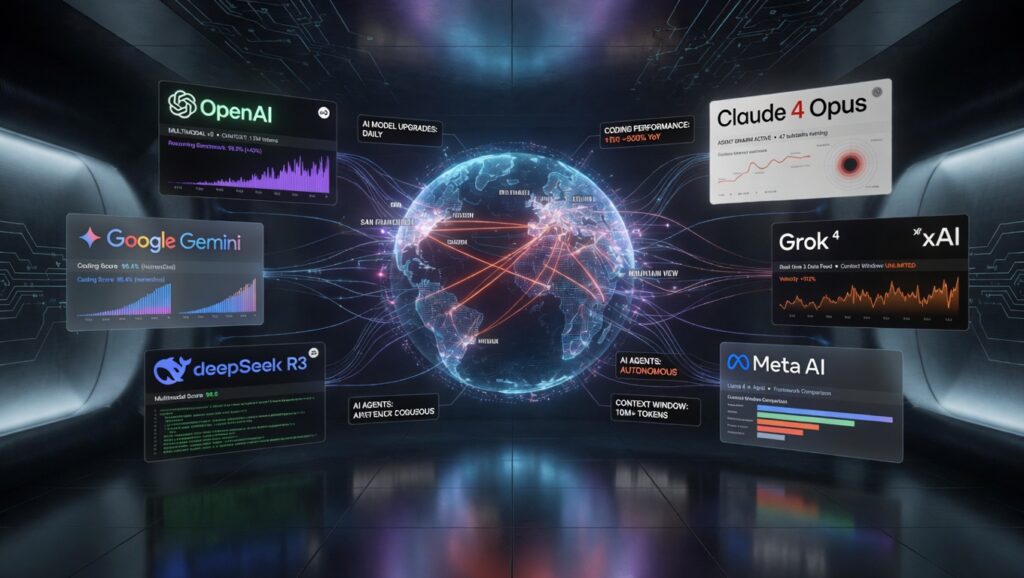
OpenAI is currently facing growing competition from companies like Anthropic, Google DeepMind, Meta AI and xAI as the AI industry rapidly expands in 2026.
Coding AI, enterprise automation and AI agents have become some of the most competitive areas in technology right now. Many companies are trying to dominate the next generation of artificial intelligence tools before the market fully matures.
Because of this, OpenAI appears to be simplifying its internal structure to move faster and compete more aggressively.
What This Could Mean for Users
For everyday users, this restructuring could eventually lead to smarter and more connected AI tools.
Future versions of ChatGPT may offer:
- better coding assistance
- deeper workflow automation
- improved productivity tools
- stronger integration with apps and software
- more advanced AI agents capable of completing tasks independently
Businesses and developers may also benefit from tighter integration between OpenAI’s API systems and consumer products.
A Bigger Shift in the AI Industry
This update shows that OpenAI is no longer focused only on building an AI chatbot. The company now appears to be positioning itself as a full scale AI platform company aiming to shape how people interact with artificial intelligence in everyday life.
As the AI race continues to accelerate across Silicon Valley, OpenAI’s restructuring could become one of the defining moments in the next phase of the technology industry.