
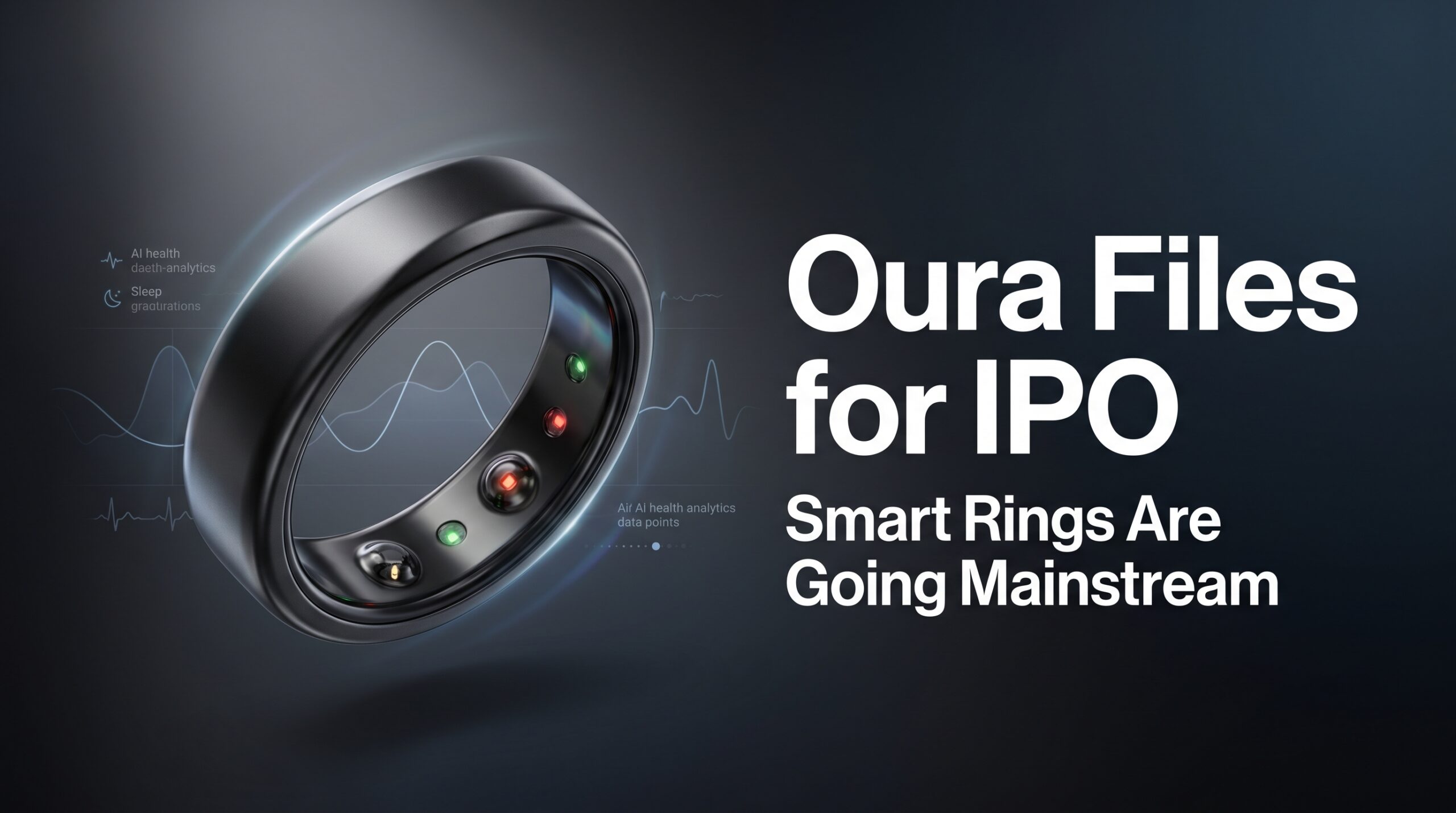
Smart ring company Oura has officially filed to go public, and the move is quickly becoming one of the biggest signs yet that biometric smart rings are entering the mainstream technology market. While the IPO itself is major business news, the bigger industry story is the rapid growth of AI-powered wearable health tracking.
Over the past few years, smart rings have evolved from niche wellness gadgets into advanced biometric devices capable of tracking sleep, stress, heart rate, recovery, and daily health patterns through AI-driven analysis systems. Oura has emerged as one of the most recognized brands leading that shift.
Smart Rings Are Growing Beyond Fitness Gadgets
Unlike traditional smartwatches that focus heavily on screens and notifications, smart rings are increasingly being promoted as passive health technology. Their compact design allows users to track biometric data continuously without constantly interacting with a device throughout the day.
This approach has become increasingly popular among users looking for more discreet wellness tracking and better sleep monitoring. Analysts believe that growing demand is one of the main reasons investors are paying close attention to Oura’s IPO plans.
AI Health Tracking Is Driving the Market
The smart ring industry is growing alongside the rise of AI-powered health analysis. Modern wearable devices are no longer limited to counting steps or basic fitness metrics. Companies are now using artificial intelligence to analyze long-term biometric patterns and generate personalized wellness insights.
Oura’s platform has become particularly known for sleep intelligence and recovery tracking, which many users now consider more valuable than traditional fitness-focused wearables.
As AI health systems continue improving, wearable companies are increasingly positioning smart rings as everyday biometric assistants rather than simple accessories.
Competition in the Wearable Industry Is Increasing
Oura’s success has also intensified competition across the wearable technology sector. Major companies including Samsung and several health-tech startups are expanding into the smart ring category as interest in biometric wearables continues rising.
Many industry experts believe smart rings could become one of the fastest-growing areas in consumer health technology because they combine:
- continuous biometric tracking,
- AI-driven insights,
- long battery life,
- and minimal distraction.
This broader industry shift is one reason Oura’s IPO filing is attracting attention far beyond the startup world.
Why Oura’s IPO Matters
The IPO filing is being viewed as more than just another tech company entering the stock market. For many analysts, it represents a larger transition happening inside wearable technology and AI health tracking.
As consumers increasingly prioritize wellness monitoring, sleep analysis, and passive biometric intelligence, smart rings are beginning to emerge as a serious new category in modern consumer technology.
Oura’s public-market move may now become one of the clearest signs yet that AI-powered wearable health devices are moving into the mainstream.