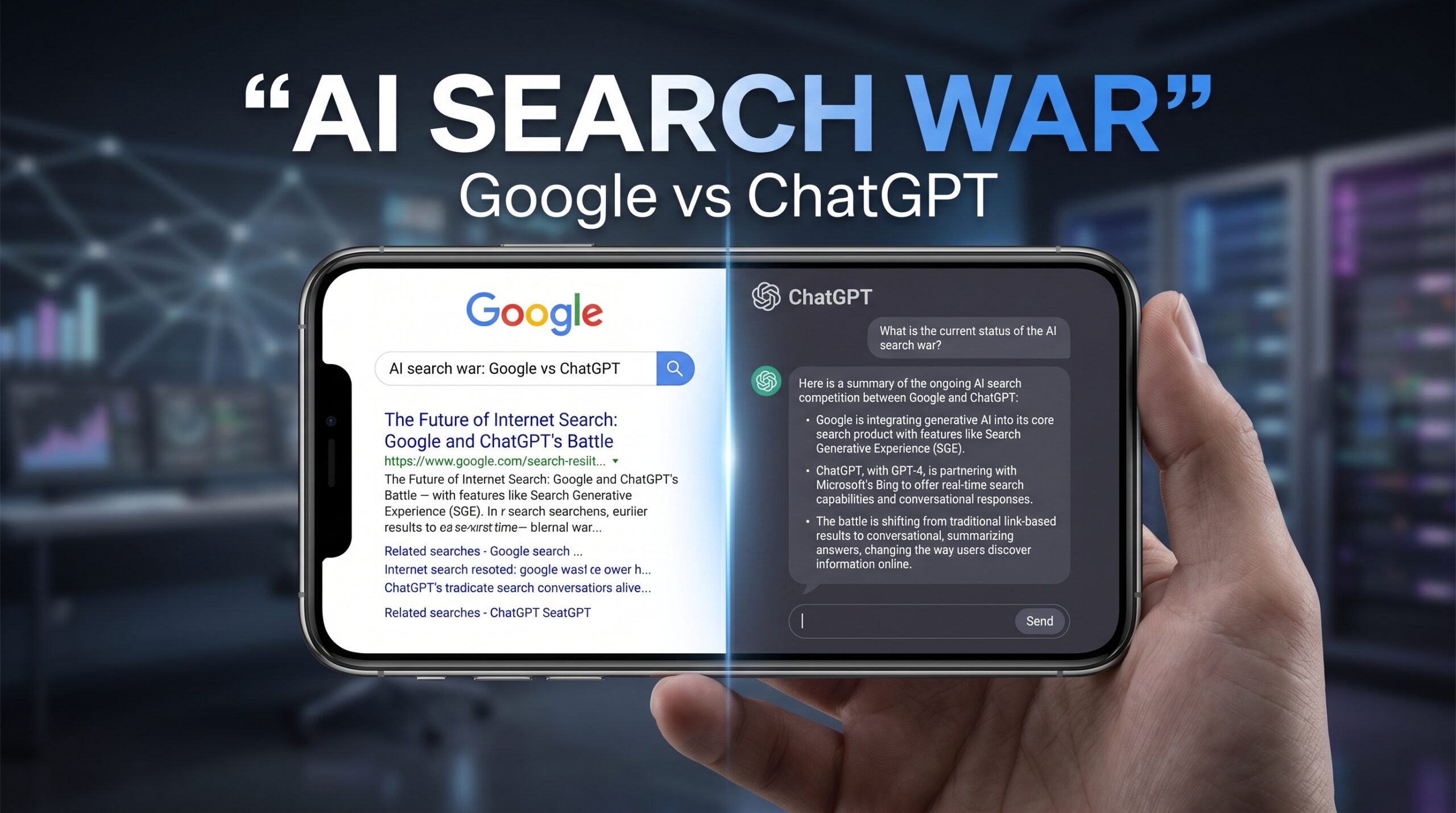
For more than two decades, Google Search has been the primary gateway to the internet. Users typed questions into a search bar, browsed through blue links, and visited websites to find information. But that long-standing system is now beginning to change as artificial intelligence rapidly transforms how people search online.
The growing competition between Google and ChatGPT is becoming one of the biggest technology battles in years, with AI-powered assistants increasingly changing how users discover information, browse the web, and interact with digital content. What initially started as a chatbot race is now evolving into something much larger: a fight over the future of internet search itself.
AI Search Is Changing User Behavior
One of the biggest reasons this story is attracting so much attention is because AI assistants are fundamentally changing how users interact with information online. Instead of manually searching through multiple websites, many users are now asking AI systems direct questions and receiving summarized answers instantly.
Platforms like ChatGPT, Google Gemini, Perplexity, and Claude are increasingly acting less like traditional chatbots and more like intelligent search assistants capable of explaining topics, comparing products, summarizing articles, and browsing the web in real time. This shift is gradually changing the way people navigate the internet, especially as convenience becomes more important than traditional web browsing for many users.
Google Is Facing One of Its Biggest Challenges in Years
Google still dominates global search traffic, but the rise of AI assistants has created one of the company’s most serious long-term challenges in decades. Search has always been at the center of Google’s business model, powering advertising, website discovery, online commerce, and much of the modern internet economy.
However, AI-generated answers are beginning to reduce the need for users to click through multiple websites to find information. That shift could eventually impact how traffic flows across the internet and how publishers, businesses, and creators reach audiences online.
This is one reason Google has aggressively accelerated its AI strategy through Gemini and AI-powered search experiences. The company is increasingly integrating generative AI directly into Search, Chrome, Android, Workspace, and other major products in an effort to maintain its dominance as user habits evolve.
ChatGPT Search Usage Continues to Grow
At the same time, ChatGPT is rapidly becoming more than just an AI chatbot. OpenAI has steadily expanded the platform’s browsing, research, and conversational capabilities, allowing users to use ChatGPT as an alternative way to search for information online.
The platform’s ability to deliver direct conversational answers has made it especially popular for quick research, coding help, product comparisons, summaries, writing assistance, and learning complex topics. Many users are now increasingly relying on AI assistants for tasks that previously required multiple Google searches and website visits.
As adoption continues growing, industry analysts believe AI-powered search behavior could expand much faster over the next few years.
The Internet Economy Could Be Affected
The rise of AI search is also creating growing concern across the publishing and SEO industries. For years, websites relied heavily on search engine traffic for visibility, advertising revenue, and audience growth. But if users increasingly consume AI-generated summaries instead of visiting original websites directly, the economics of the web could begin changing significantly.
Publishers, creators, marketers, and SEO professionals are now closely watching how AI-generated answers may affect website traffic, digital advertising, online publishing, and search visibility in the future.
Some analysts believe the internet may eventually shift toward a hybrid system where AI assistants become the first layer of information discovery while traditional websites continue serving as deeper sources of content and verification.
AI Browsers and Search Assistants Are Starting to Merge
Another major trend emerging across the industry is the blending of AI assistants with web browsing itself. Rather than functioning only as separate chat applications, AI systems are increasingly evolving into full browsing companions capable of searching, analyzing, summarizing, organizing, and interacting with information dynamically.
This has fueled growing discussion around “AI-native browsing,” where traditional search engines, assistants, and browsers slowly merge into a more conversational internet experience.
Companies across the industry are now racing to build ecosystems that combine AI assistants, search, productivity, browsing, and automation into unified digital platforms designed for the next generation of internet users.
Why the AI Search War Matters
The battle between Google and ChatGPT is becoming far more important than a typical technology rivalry. It represents a larger shift in how information may be accessed online in the future.
Search engines shaped the modern internet for decades by organizing websites and directing users toward content. AI assistants are now beginning to reshape that model by delivering information more directly, conversationally, and efficiently.
While traditional search is unlikely to disappear anytime soon, user behavior is clearly starting to evolve. The companies that successfully adapt to this transition could play a major role in defining the next era of the internet.
Final Thoughts
The AI search war between Google and ChatGPT is no longer just a competition between two technology companies. It is becoming a broader transformation affecting search engines, websites, digital publishing, and the way billions of people interact with information online.
As AI assistants continue improving and user habits keep shifting, the future of internet search may look very different from the system people have relied on for the past twenty years.