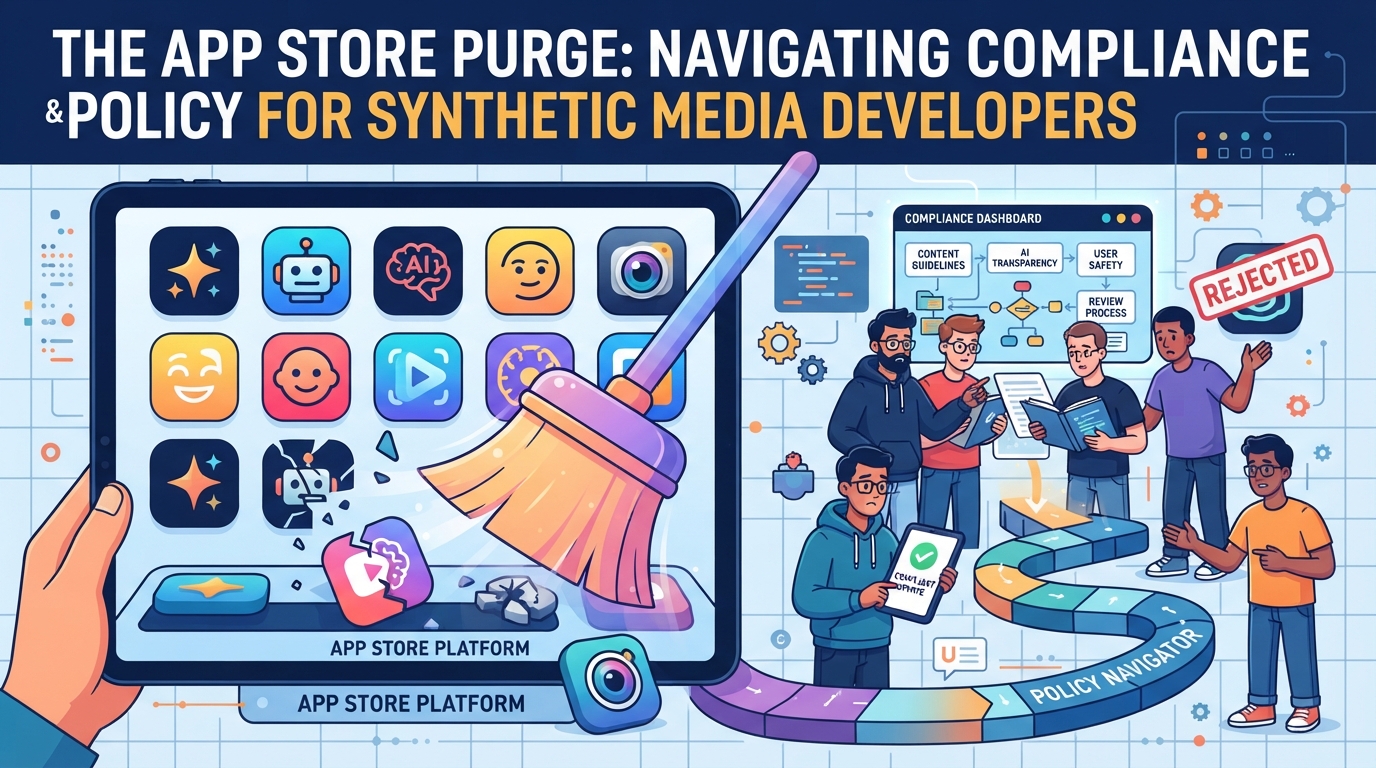
The App Store Purge: Navigating Compliance and Policy for Synthetic Media Developers
Introduction: The Reality of the 2024 AI App Store Purge
If you’ve launched a synthetic media app recently, you’ve likely felt the ground shift beneath your feet. Overnight, the wild-west era of generative AI has ended, replaced by a strict new regime of platform gatekeeping.
Developers worldwide are waking up to a sudden wave of app store rejections. According to data from app intelligence platforms like Appfigures, the surge in generative AI app submissions in late 2023 and early 2024 was met with an unprecedented wave of enforcement, resulting in an estimated 60% spike in rejections and sudden removals for apps utilizing synthetic media without strict guardrails. Apple and Google are no longer just reviewing code; they are actively policing deepfakes, voice clones, and face-swaps.
Developer forums and industry analyses—such as reports on the sudden removal of viral face-swap apps from the App Store—show that the primary triggers for these sudden bans include:
- Consent Gaps: Generating synthetic faces or voices without explicit, verifiable user permission.
- Safety Failures: Lacking robust, real-time content moderation filters.
- IP Violations: Utilizing copyrighted training data or generating trademarked outputs and unlicensed celebrity likenesses.
Surviving this landscape requires more than just clever engineering. It demands a proactive mastery of AI app store compliance—the ultimate playbook for keeping your synthetic media app live, approved, and profitable in 2024.
Google Play’s Safety Rules for Synthetic Media Developers
While Apple often relies on its existing, broad guidelines to police new technologies, the Google Play generative AI policy is highly explicit. In late 2023, Google introduced a dedicated “Generative AI Content” policy within its Developer Policy Center. This policy explicitly mandates that developers of apps generating content via AI must provide clear in-app reporting features, proactively prevent the generation of restricted content, and strictly prohibit deceptive “manipulated media” (such as deepfakes).
To keep your synthetic media app on the Play Store, Google’s explicit playbook requires you to build a multi-layered defense system focused on three non-negotiable pillars:
- Mandatory Safety Filters: Your AI models must have hardcoded guardrails. They must block the generation of non-consensual sexual content, hate speech, and deceptive political material before the user even sees it.
- Deepfake Content Moderation: Google strictly prohibits deceptive “manipulated media.” If your app generates realistic face-swaps or voice clones, you must implement robust deepfake content moderation tools to flag and block bad actors.
- In-App Reporting Systems: Users need a one-tap mechanism to report abusive AI-generated outputs. More importantly, your team must act on these reports swiftly to avoid sudden developer account termination.
Essentially, Google expects developers to act as the primary gatekeepers of their own AI models, enforcing these highly specific, dedicated rules.