Under the Hood of Ultra-Premium AI Agents: Is Vertu’s $6,880 Executive Assistant Actually Better than Open Source?
The Rise of Ultra-Premium Executive AI Assistants
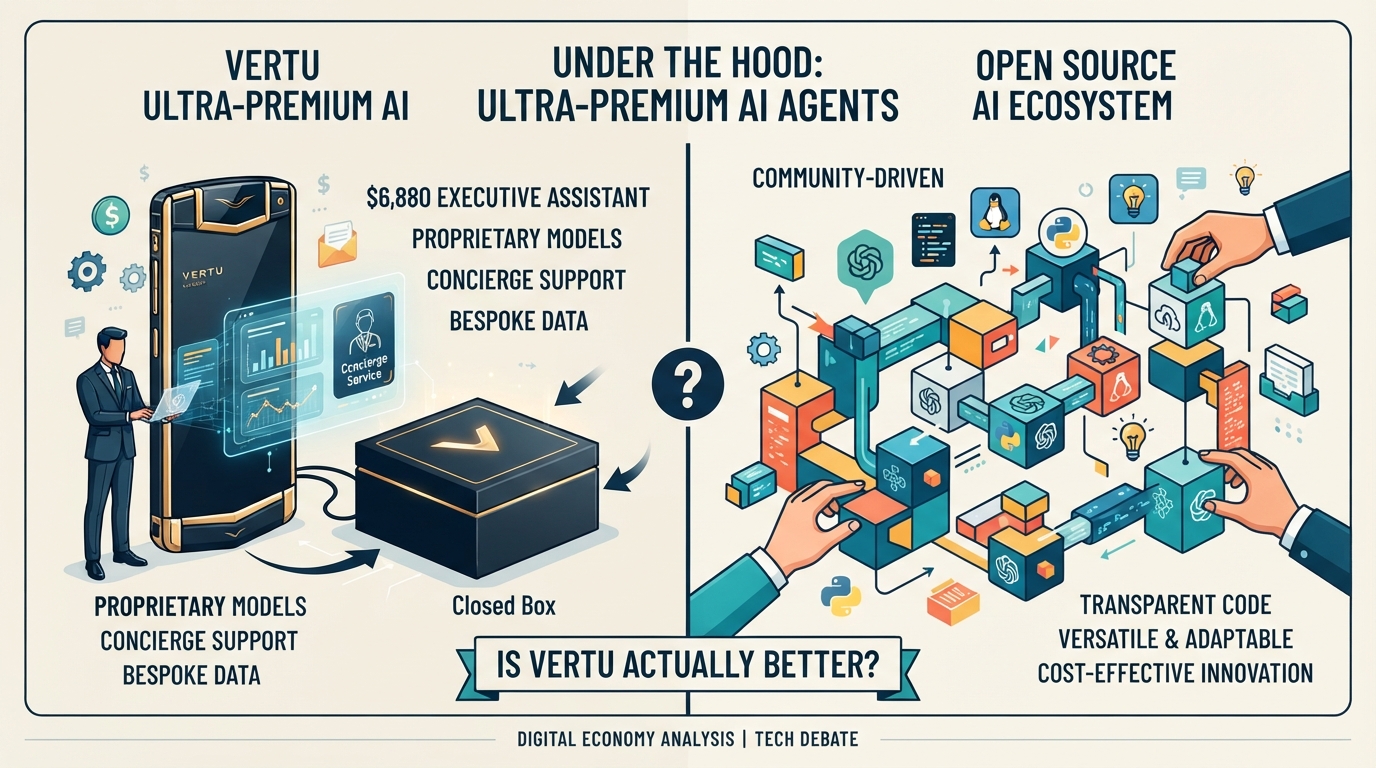
Remember when luxury meant a titanium chassis and a physical sapphire concierge button? Vertu, famous for the legendary Vertu Signature Touch, has traded leather-backed nostalgia for cutting-edge silicon. They are now targeting ultra-high-net-worth individuals with a $6,880 executive AI assistant designed to manage everything from private jet charters to elite scheduling.
This shift marks the dawn of “vanguard AI”—where elite, proprietary models promise absolute privacy and white-glove digital curation. But it raises a critical question for tech-savvy executives: is this premium price tag justified, or are we paying for a luxury brand wrapper?
To find out, we are pitting these high-end proprietary concierge systems against self-hosted, open-source alternatives.
Here is the core clash we are dissecting:
- The Proprietary Promise: Zero-friction setup, human-in-the-loop verification, and exclusive lifestyle APIs.
- The Open-Source Reality: Absolute data sovereignty, zero recurring fees, and infinite customization using local models.
Under the Hood: Vertu’s $6,880 Hybrid Concierge
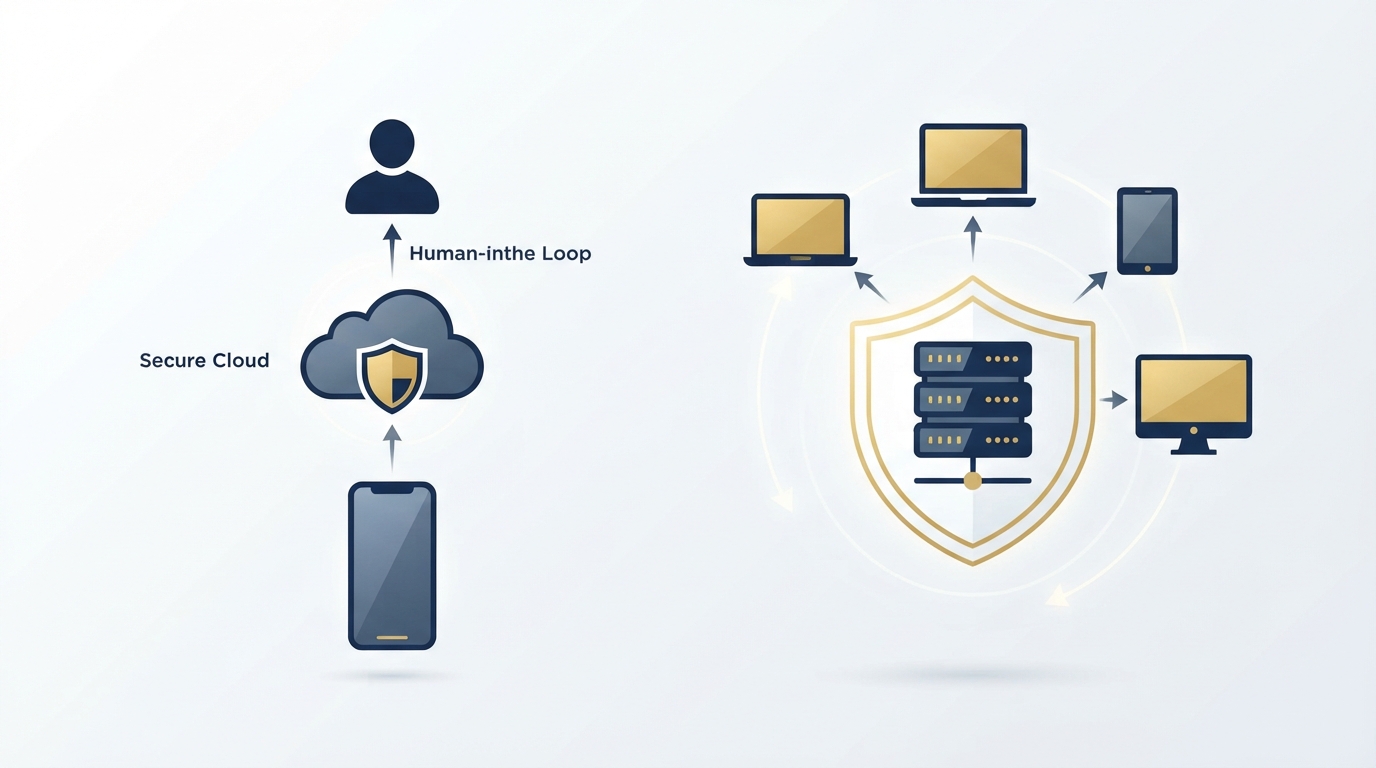
The magic of the Vertu Signature Touch doesn’t rely on a single, all-powerful LLM. Instead, it utilizes a sophisticated dual-layer architecture that seamlessly blends automated machine learning with real-time human oversight.
For standard requests—like reserving a table at a Michelin-starred restaurant—this AI concierge service boasts an impressive 94% accuracy rate. The system excels at parsing structured data and executing basic bookings.
However, when edge cases or highly customized requests arise, a human-agent fallback automatically kicks in. While this dual-layer approach guarantees flawless execution, it introduces a noticeable latency bottleneck:
- Standard AI booking: ~3 seconds latency (94% accuracy on basic tasks).
- Human-verified fallback: 5 to 15 minutes delay (for complex, bespoke logistics).
This safety net completely prevents embarrassing AI hallucinations, but premium users must trade instant digital responsiveness for absolute real-world accuracy.
The Open-Source Route: Llama 3 and Mistral for Enterprise
If a $6,880 price tag and potential human-in-the-loop delays don’t fit your enterprise strategy, there is a powerful alternative. Enter the world of open-source AI, where you can build a bespoke executive assistant tailored precisely to your organization’s infrastructure.
State-of-the-art models like Meta’s Llama 3 and Mistral’s Mixtral 8x22B offer near-proprietary performance without the recurring SaaS tax. By hosting these models on your own secure servers, you gain full control over your tech stack.
Choosing the open-source route delivers three massive advantages for enterprise deployment:
- Absolute Data Sovereignty: Sensitive executive schedules, financial data, and emails never leave your private, firewalled cloud.
- Zero Licensing Fees: Swap eye-watering subscription costs for predictable, scalable compute spend.
- Hyper-Customization: Fine-tune Llama 3 on your company’s internal wikis, brand voice, and legacy databases.
Ultimately, this route trades Vertu’s out-of-the-box convenience for unmatched control, privacy, and long-term cost efficiency.
Feature Comparison: Turnkey Luxury vs. Dev-Heavy Sovereignty
How does the white-glove experience of Vertu stack up against the DIY nature of self-hosting? It comes down to a fundamental trade-off: your time versus your tech stack.
Here is how the deployment and upkeep realities compare:
- Setup Time: Vertu’s proprietary AI assistant is active in minutes via concierge onboarding. Conversely, building an open-source AI pipeline requires days—or weeks—of environment configuration and API integration.
- Technical Skill: Vertu requires zero technical literacy. The open-source route demands a skilled DevOps engineer or Python developer to orchestrate the deployment.
- Long-Term Maintenance: Vertu handles all security patches and updates silently in the background. With open source, your team is on the hook for managing model drift, server uptime, and API breaks.
Ultimately, Vertu charges a premium to make the technology invisible, while open source demands your constant attention to keep the gears turning.
The Cost of Security: SOC 2 vs. Absolute Data Sovereignty
When you are handling ultra-sensitive executive communications, security isn’t just a feature—it’s a legal boundary. Vertu’s proprietary AI assistant secures your data using enterprise-grade SOC 2 Type II compliance. This means their cloud infrastructure is rigorously audited, encrypted, and monitored by third-party experts. For most enterprises, this “trust-but-verify” SaaS model is more than enough to satisfy IT departments.
However, for those handling trade secrets, proprietary algorithms, or highly regulated financial data, “trust” remains a vulnerability. This is where hosted open-source AI takes the crown.
By running models locally on your own hardware, you achieve absolute data sovereignty:
- Zero Data Leakage: Your sensitive prompts and corporate data never leave your physical servers or private cloud.
- No Third-Party Risk: No SaaS vendor, external API provider, or remote employee can ever access your interactions.
- Total Sovereignty: You control the physical security, access logs, and data retention policies.
Ultimately, Vertu offers world-class compliance, but open source delivers absolute, uncompromisable control.
Total Cost of Ownership: Subscription Fees vs. Hosting TCO
When choosing between a luxury turnkey solution and a self-hosted alternative, the financial math isn’t as simple as comparing price tags.
Vertu’s $6,880 executive AI assistant offers predictable, flat-rate pricing. You pay for the premium hardware and the managed service, with zero hidden operational headaches.
Building a custom open-source AI stack, however, shifts your budget from retail markup to infrastructure and talent:
- Cloud Compute (GPUs): Running models on AWS or RunPod costs $1.50 to $4.50 per hour per active node.
- Engineering Overhead: You need DevOps and AI engineers to deploy, fine-tune, and maintain the pipeline (easily $150k+/year).
- Maintenance: Security patches and API integrations require ongoing developer hours.
If you already have an in-house engineering team, hosting open source is highly cost-effective at scale. But if you have to hire dedicated talent just to keep the lights on, that “free” model quickly becomes far more expensive than Vertu’s plug-and-play package.
The Verdict: Is Vertu’s Premium Assistant Worth It?
Ultimately, the choice between Vertu’s turnkey luxury and a custom open-source build comes down to what you value more: your time or your technological control.
Here is how to decide which path fits your workflow:
- The Elite Executive: If you want a status-symbol executive AI assistant that works flawlessly out of the box, Vertu is worth the investment. It is designed for those who measure ROI in saved minutes and frictionless execution, not software licenses.
- The Privacy-Focused Enterprise: If data sovereignty, deep proprietary integration, and custom security protocols are non-negotiable, building on open-source is your only logical path.
- The Pragmatic Professional: If you want high-end AI capabilities without the premium price tag or the engineering headaches, standard managed SaaS tools offer the perfect middle ground.
In short: Buy Vertu for immediate prestige and white-glove simplicity; build open-source if you want to own your digital destiny.