Architecting Tool-Calling Agents: Inside Google’s AI Mode and App Integration APIs
Introduction to AI Agent Tool Calling
For years, we treated large language models like advanced search engines—you ask a question, and it writes a response. Today, we are witnessing a massive paradigm shift from passive text generators to active problem solvers.
This transition is powered by agentic workflows, where models don’t just chat; they act. At the center of this evolution is AI agent tool calling, a capability that enables models to connect directly to the physical and digital world.
- Passive LLMs: Read, summarize, and generate static text based on historical training data.
- Active Agents: Query live databases, trigger APIs, and execute real-world code dynamically.
Instead of guessing facts, the model recognizes when it needs external data and requests the exact tool to get it. By leveraging modern APIs, developers can construct reliable, deterministic integrations that turn these cognitive models into execution engines.
The Core Mechanics of Function and Tool Calling
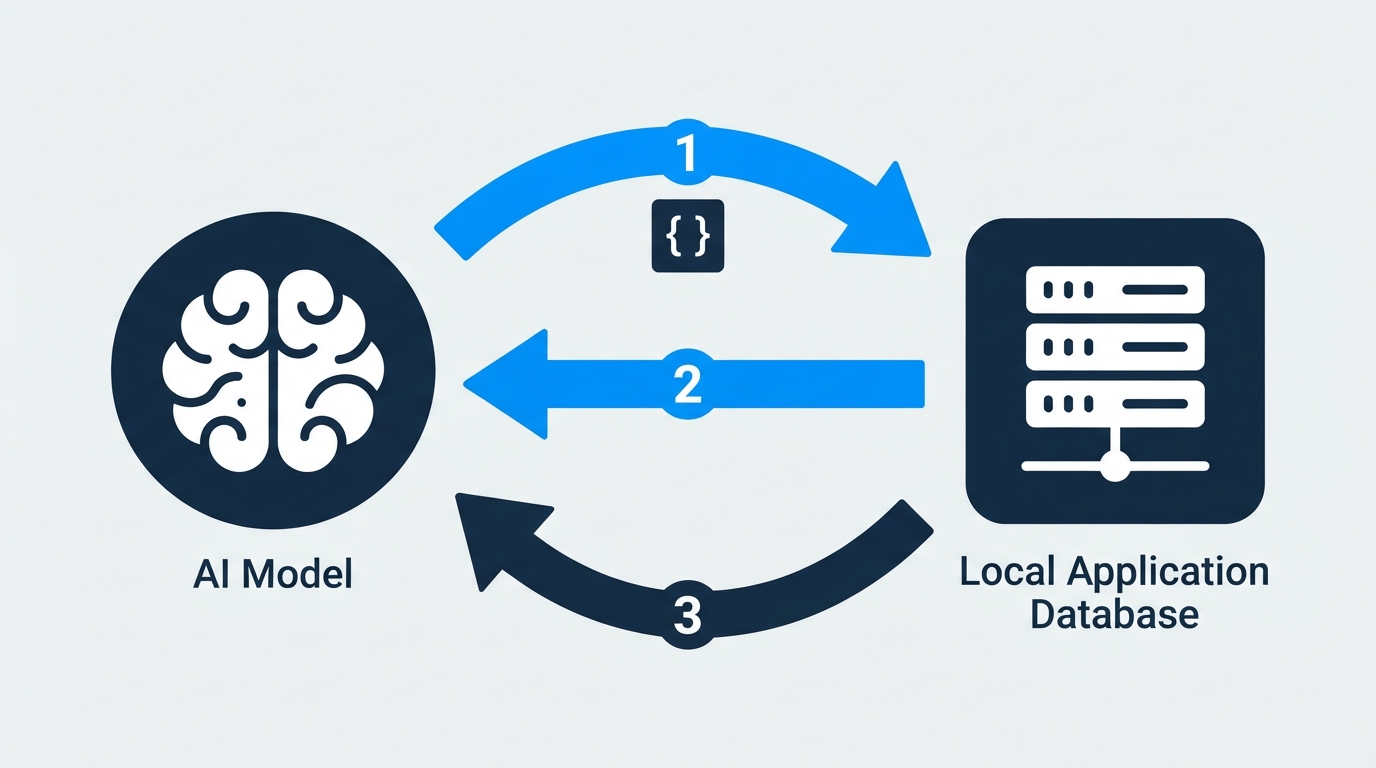
To understand how an agent moves from thought to action, we must look under the hood. The entire process of function calling operates as a precise, three-step loop between the model and your application code:
1. The Trigger: You ask, “Is SKU-99 in stock?” The LLM detects it lacks this real-time data but recognizes a registered get_inventory tool.
2. The Structured Response: Instead of guessing or writing conversational text, the model halts generation and outputs structured arguments (a clean JSON object like {"sku": "SKU-99"}).
3. Local Execution: Your application intercepts this JSON payload, runs the database query locally, and feeds the raw results back to the LLM.
This architecture ensures the model never accesses your database directly. By keeping execution local, your application maintains absolute control over security, API keys, and system credentials.
Inside Google’s Gemini API: Function Calling and Integration
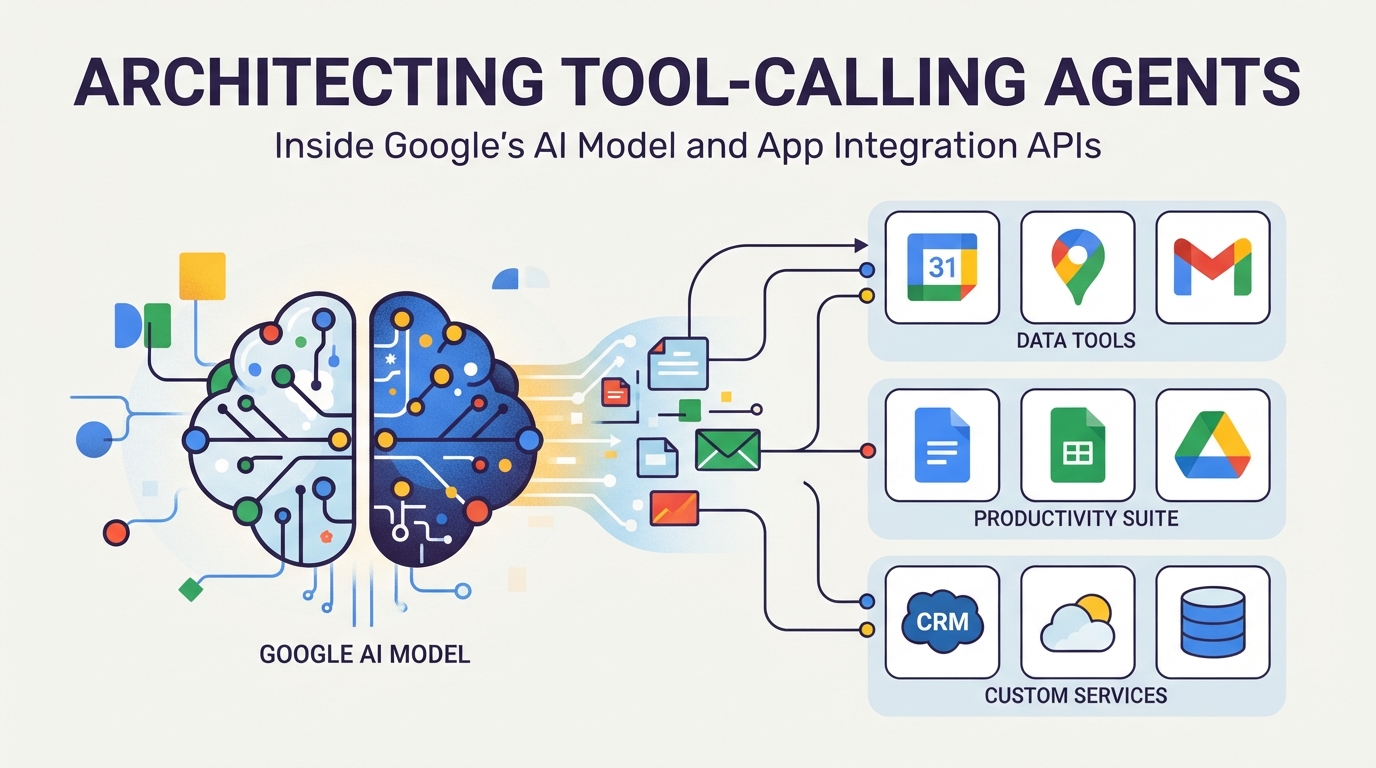
Google’s Gemini API—including the multimodal Gemini 1.5 Pro—handles this workflow by treating external integration as a core capability. To connect your local application workflows, you describe your available tools to the model using JSON schema function declarations.
Think of these declarations as a precise, structured API contract. You aren’t exposing your actual codebase; instead, you provide Gemini with a metadata map containing:
- Name: The exact identifier of your local function (e.g.,
fetch_shipping_status). - Description: A detailed, natural-language explanation of what the tool does, which Gemini’s router uses to select the right tool.
- Parameters: A strict JSON schema defining the required input types, argument constraints, and property descriptions.
When a query requires real-time data, Gemini parses these declarations, matches the user’s intent to the best tool, and outputs a structured JSON payload matching your schema. This creates a highly reliable, type-safe bridge between raw LLM reasoning and your production environment.
Architecting for Reliability: Best Practices in Tool Selection
Building reliable AI agents requires shifting from “hope-based” prompting to rigorous architectural constraints. Start by defining narrow, hyper-specific Pydantic schemas to restrict the model’s output space. By keeping parameters minimal and strictly typed, you eliminate hallucinated arguments before they happen. Combine these schemas with few-shot prompting in your system instructions, showing the agent exact examples of complex tool-selection decisions.
Next, always decouple tool selection from immediate execution. Instead of letting the model directly trigger a database write or API call, treat its output as a “proposal.” Run this proposal through an intermediary validation layer to sanitize arguments, check permissions, and handle dry-runs before execution.
Implement these three design patterns to secure your pipeline:
- Strict Typing: Use Pydantic schemas to enforce exact parameter types (e.g.,
Intinstead of a loose string). - Few-Shot Guardrails: Provide clear “input-to-tool” mapping demonstrations in the system prompt.
- The Gateway Pattern: Route Gemini’s tool calls through a middleware controller rather than executing them raw.
Implementing Robust Error-Handling and Self-Correction Loops
Even with a gateway validation layer, runtime failures are inevitable. An API might throw a 404 error, or a database query might time out. Instead of crashing, your agent needs a way to recover gracefully.
This is where error-handling loops come into play. When an execution fails, package the raw error message and feed it directly back to the Gemini model as a new user-turn instruction.
To build a resilient self-correction loop, implement this three-step cycle:
1. Capture the Exception: Intercept the runtime error (e.g., “Invalid date format, expected YYYY-MM-DD”).
2. Format the Feedback: Inject the error back into the conversation history, clearly labeling it as system execution feedback.
3. Prompt for Correction: Ask the model to analyze the failure, adjust its parameters, or select an alternative tool.
By treating errors as contextual data rather than fatal stops, your agent can dynamically rewrite its arguments and successfully complete the task on its second attempt.
Securing Agentic Workflows through Decoupled Execution
While self-correction loops make agentic workflows incredibly resilient, they also introduce a massive security vector if left unchecked. Letting an LLM directly execute code in an un-sandboxed environment is an open invitation for prompt injection and remote code execution attacks.
The gold standard for securing these systems is decoupled execution. Instead of handing the keys to the model, your application layer must act as the gatekeeper, executing the code locally within its own secure boundary.
Here is why decoupled execution is non-negotiable for enterprise security:
- Strict Sandboxing: You control the runtime environment, limiting file access, network privileges, and system resources.
- Input Validation: Your application can sanitize and validate arguments before any local API or function is triggered.
- Audit Trails: You gain complete visibility into what code ran, when it ran, and exactly what resources it accessed.
By keeping the LLM in a purely advisory role—where it only suggests actions while your app retains execution control—you neutralize the risk of rogue AI behavior.
Conclusion: The Next Era of App Integration APIs
Building production-ready systems requires moving past simple text prompts toward robust, bidirectional system integrations. By mastering AI agent tool calling, you transform static language models into active orchestrators capable of navigating complex enterprise workflows safely.
To succeed in this next era of app integration, always anchor your architecture on three core pillars:
- Rigid Schemas: Pair the Gemini API with strict OpenAPI specifications to guarantee predictable, well-structured tool arguments every time.
- Decoupled Control: Maintain a strict boundary where the LLM recommends actions, but your application retains sole execution authority.
- Idempotent Design: Ensure your internal APIs can handle repeated calls safely without triggering unintended side effects.
Ultimately, the goal isn’t just to write code—it is to architect secure environments where models and APIs seamlessly collaborate. Start building, stay secure, and let Gemini power your next-gen agentic workflows.